

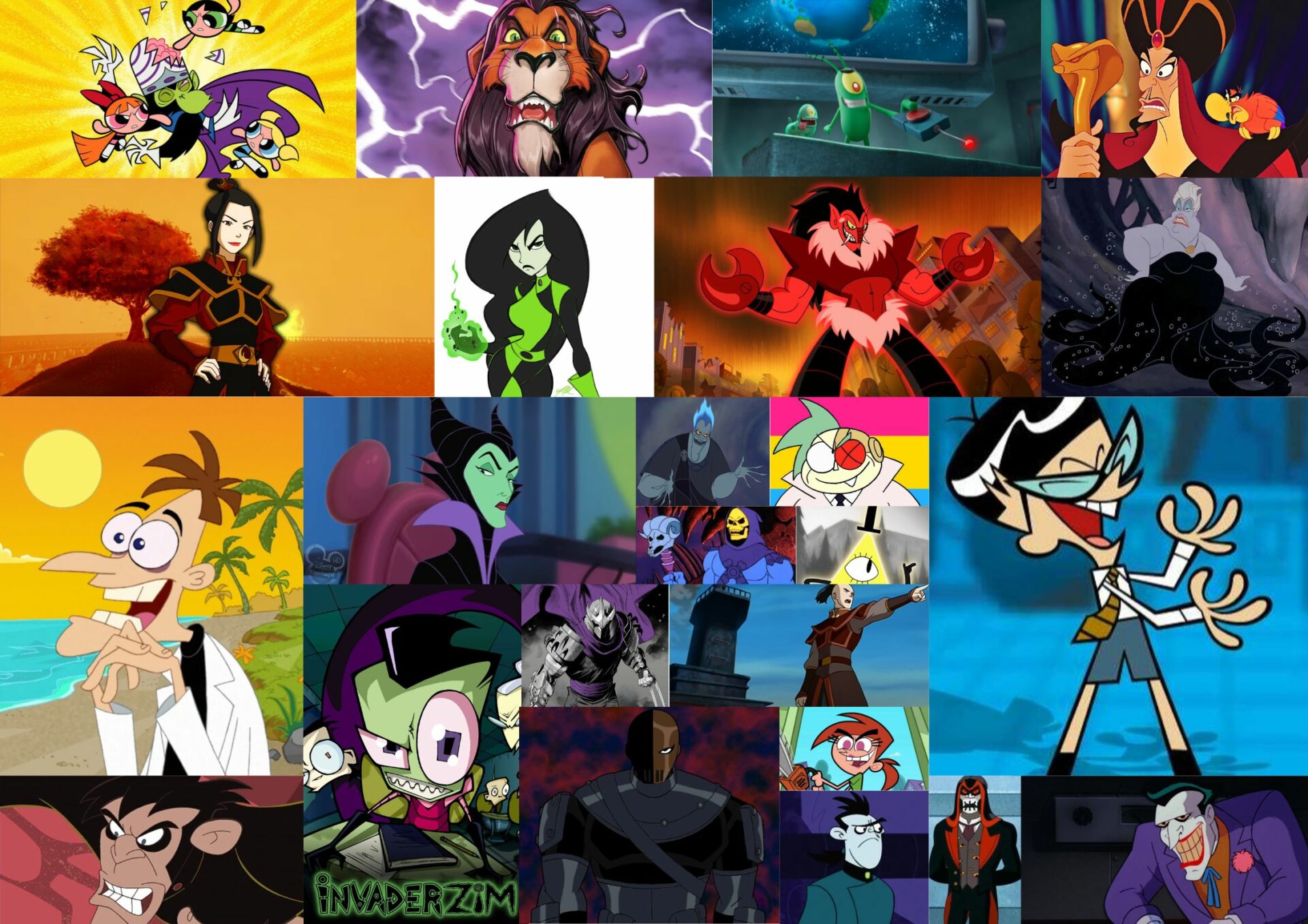
Top 30 Cartoon Characters That Were Villains
Our list rounds up the top 30 cartoon characters that were villains, each one more wonderfully wicked than the last.
Netflix, Nollywood
Right now, Aníkúlápó: The Ghoul Awakens feels less like a complete chapter and more like a long, uneven bridge between two stronger stories.
There is a reason some viewers insist that there is no good review of Kunle Afolayan’s Aníkúlápó: The Ghoul Awakens. It is not because the series lacks material to discuss. On the contrary, it is bursting with ideas, themes, visuals, and cultural intent.
The challenge is that the series itself feels like a collection of jumbled storylines struggling to find narrative cohesion.
Kunle Afolayan’s Aníkúlápó was mythic, poetic, and spiritually grounded. It opened viewers up to the world of the supernatural, backed by verses from Ifa panegyrics. It knew what story it wanted to tell and wrapped it smugly in Yoruba cosmology and solid storytelling.
Likewise, in Aníkúlápó: Rise of the Spectre, when the theme of reincarnation was introduced, it was supported by Ifá panegyrics that grounded the supernatural in Yoruba spirituality. The chants, the rhythm, the oral tradition, and the use of mythical creatures did not just decorate the scene, which was heavily reliant on CGI; they explained it. The movie carried cultural and metaphysical weight.
Aníkúlápó: The Ghoul Awakens, however, feels like a collection of short stories still looking for its narrative.
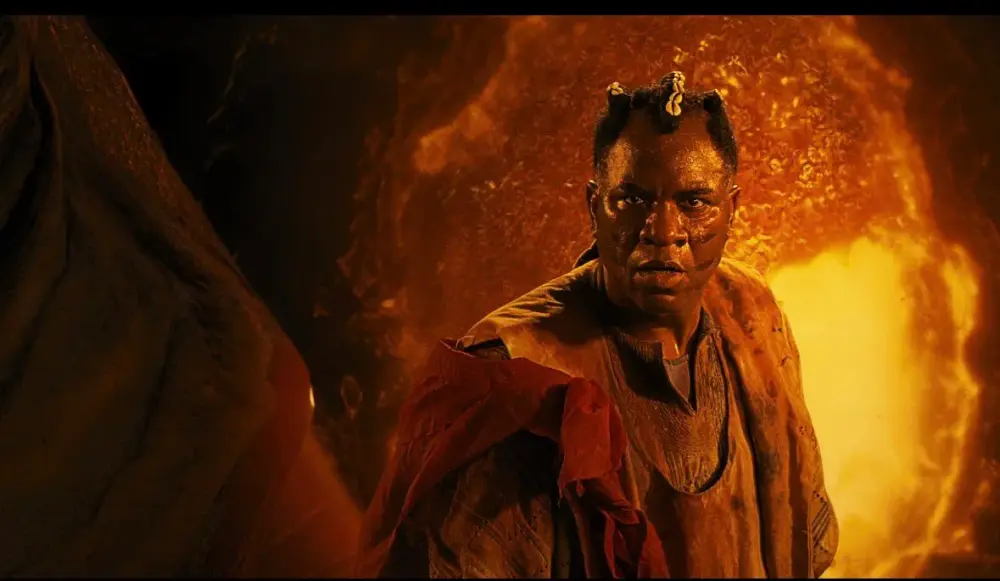
The opening scenes offer viewers little more than an obvious CGI spectacle. It doesn’t narrate to the audience how we got there, nor does it establish any cinematic history. Is it really Bashorun’s ghost? Or is it his soul, floating in a sea of lava, or fire, or blood? No one knows. Even the CGI was not clear.
From the very first scene, it was confusing. And that confusion became a pattern.
The CGI and VFX are so difficult to ignore, but not for the right reasons. In folklore storytelling, at least from what I have seen so far, even in previous Aníkúlápó productions, the supernatural must feel organic, mysterious, and almost believable. Here, the overused effects feel artificial. Instead of drawing viewers into the story, they constantly remind us that we are watching CGI.
Being subtle with the CGI and working more on the story would have served this story far better.
Ironically, where the VFX department fails, the makeup department excels. The prosthetics, aging effects, injuries, and physical transformations are among the most beautiful things about the series. The makeup tells the story more effectively than the CGI ever does, making it one of the production’s high points.
The use of language, however, only flatters to deceive.
For Saga Adeolu, of the Big Brother Naija fame, his spoken Yoruba has been widely described as “Lekki Yoruba,” and the description is painfully accurate. And it’s not just Saga Adeolu alone. Kiekie, Teni Aladese, Eyiyemi Afolayan, Abike Dabiri, and even Tayo Faniran are guilty of this, too.
These people did not even bother to learn the dialects of Old Oyo. The producers clearly took much for granted here and were seemingly too arrogant to spot this flaw.
Make it make sense, please.
Their intonation, pronunciation, and even mannerisms do not belong to ancient Oyo. For a series so deeply rooted in Yoruba history and culture, this is not a minor issue. Yoruba here is not merely a communication tool; it is a time marker. When Yoruba is spoken incorrectly, it breaks the illusion of the era. The inconsistency in intonation across characters only deepens this problem, making the world feel less authentic than it should.
I believe that future producers of Yoruba period movies and epics should see this language issue amongstthe cast as a problem and tackle it accordingly.

Performance quality is also grossly inconsistent. Owobo Ogunde, who was compelling in earlier portrayals as Bashorun and was praised to high heavens, feels underutilized this season. His acting seems subdued, as if the director deliberately dimmed his light. The script gives him very little to work with; his presence feels wasted in disjointed scenes, and his acting lacks depth.
Saga Adeolu’s performance is more troubling (yes, I know this is the second time I’m mentioning him; his acting was a disaster). Beyond the language issue, his character’s motivations are unclear, and his decisions often feel illogical rather than tragic or conflicted. Why did he decide on a whim to enter the forest to hunt alone? His meeting a strange woman (what was that acting by Kiekie?) in the forest and falling in love with her, leaving me howling: “What in the name of sisi oni garawa is going on here?” because his actions seem poorly justified by the story. Instead of evoking sympathy or cinematic tension, the character often comes across as simply foolish and childish.
Abike Dabiri’s one-screen-wonder performance struggles to meet the emotional demands of her role. In a story that depends heavily on emotional conviction, her weak delivery becomes even more noticeable. The audience is expected to feel deeply by her performance, but her face was just… flat throughout her scene.
Then there is the romance between Akin and Arolake, which should be the emotional anchor of the series. While they left us on a cliffhanger in Rise of the Spectre, their love story feels very much still in its infancy. Yet the narrative treats it as something epic and established. Viewers are left wondering: Is this how people fell in love in ancient Oyo? The progression feels rushed, underdeveloped, and unconvincing, as if the director just wants to pair those two together and be on his way.
Logic, in relation to Yoruba customs and traditions, is another recurring issue.
Yoruba hunters traditionally do not hunt alone. Yet a character, a prince for that matter, is allowed to do so without explanation. What exactly is the relationship between Aderoju and the hunters? This is never properly established.
Omowunmi’s transformation from a spoiled princess to an enslaved person lacks narrative grounding. Why did her father return her back to Ede? What was her motive for leaving Abena and the Ghanaian group? Why was Arolake’s son kidnapped? What was Latorera’s relationship with the slave dealers? Saro just disappears, leaving behind a son and three women he was involved with, including a mother and a daughter, and yet nobody even mentions him. Is Awarun a slave dealer?
Yet, for all its confusion, The Ghoul Awakens achieves something profoundly important in its depiction of slavery in epic times.
One of the most powerful aspects of the series is how it confronts the horrors of slavery from the Africans’ own perspectives. It does not rely on the enslavers. Instead, it shows complicity, cruelty, betrayal, and moral decay from within African societies. These scenes on slavery alone carry the emotional and historical weight that the rest of the series struggles to maintain.
The cultural ambition is undeniable. The production design is rich. The makeup work is exceptional. The themes are also important. But the storytelling lacks the discipline to hold these elements together.

By the end of the season, it becomes clear that many plot threads remain unresolved. There is a strong sense that the writers are deliberately stretching the story across seasons, perhaps banking on season 3 (there has to be a Season 3! And ASAP!) to tie together the numerous loose ends left dangling here. And many loose ends are desperately in need of tying up.
Right now, Aníkúlápó: The Ghoul Awakens feels less like a complete chapter and more like a long, uneven bridge between two stronger stories. It is ambitious but unfocused, visually bold but narratively scattered, culturally rich but linguistically inconsistent.
You finish the season not with satisfaction, but with the feeling that you are still waiting for the story to begin properly.
Maybe season 3 will finally bring the catharsis this story desperately needs.
Our list rounds up the top 30 cartoon characters that were villains, each one more wonderfully wicked than the last.
DC is great at making comics and animated movies, while the MCU has the upper hand in its cinematic aspects
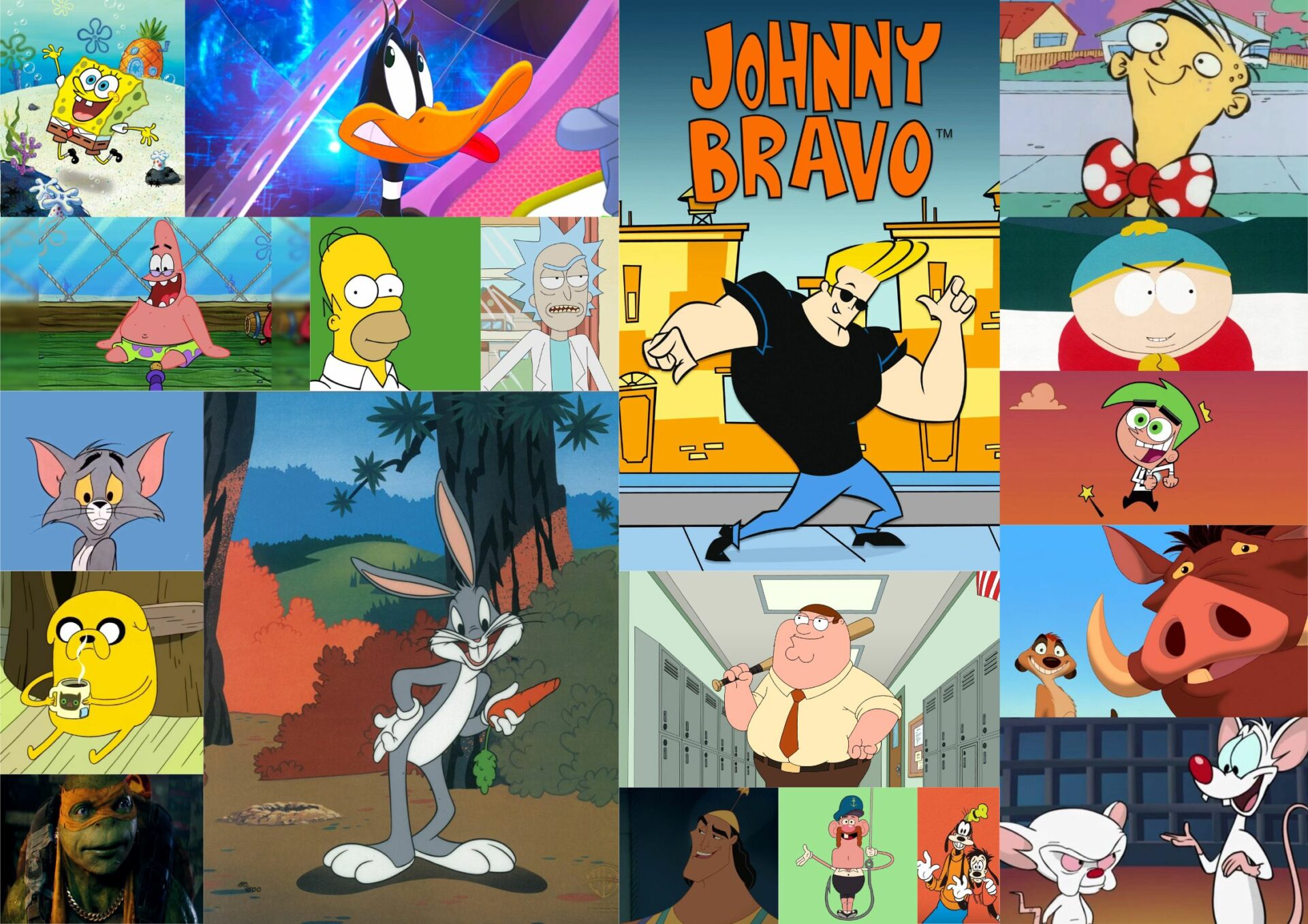
There are some outright funny cartoon characters who exist solely to crack you up, loud, hard, and with zero apology.
Discover the best apps to read books for free in 2025. Access thousands of free e-books and audiobooks on your phone or tablet. ...

Things Fall Apart is for the colonizers as well as the colonized, helping to understand the role of colonialism in the realization...
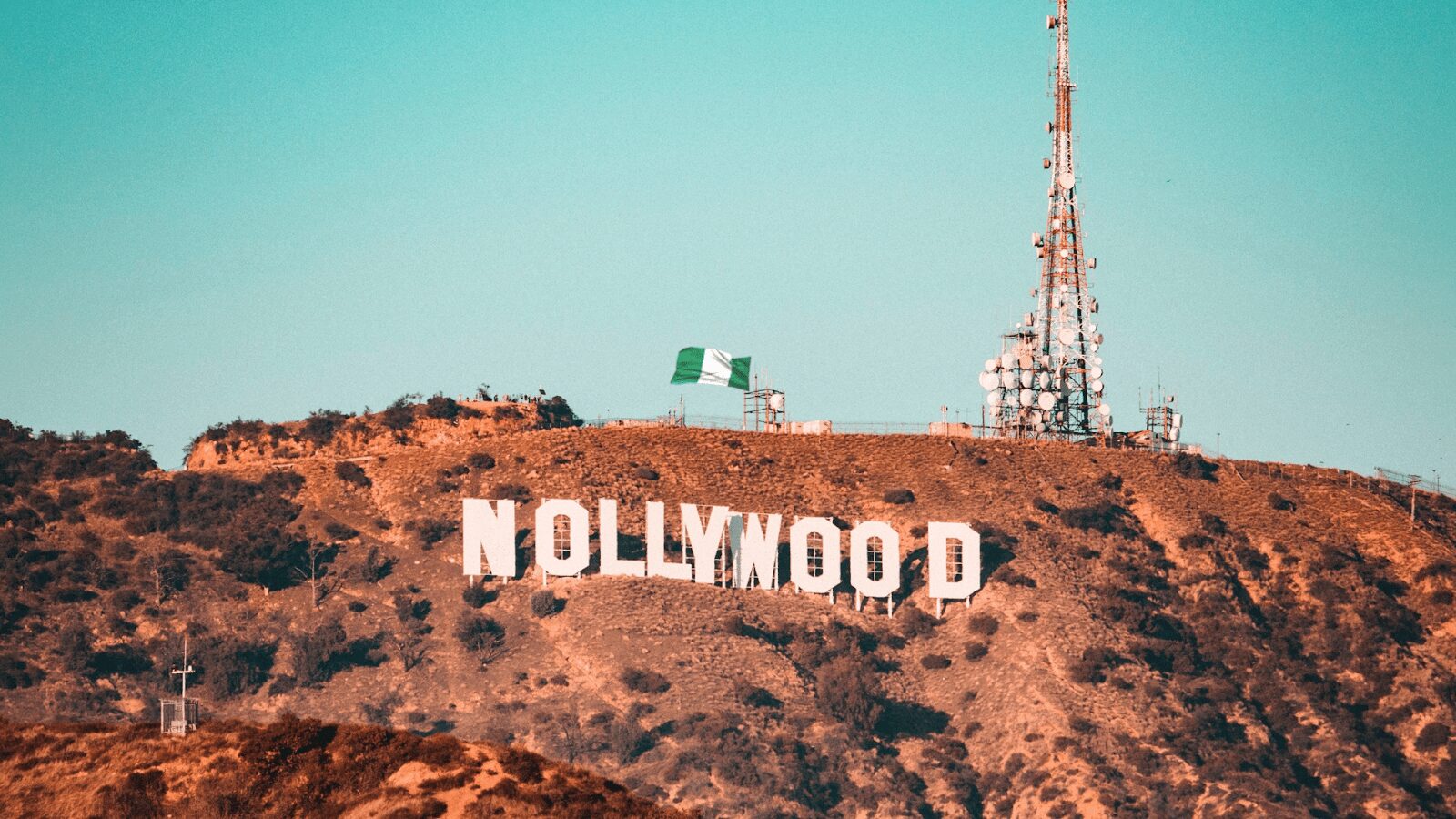
While many of the Nollywood movies on our list are quite old, it’s a testament to the capabilities of the industry’s p...
While this isn’t an exhaustive list, it comprises some of the most popular mythical creatures from around the world.
Get our magazine for free!