



Somewhere around the third chapter of a good novel, something quiet happens. The reader stops noticing the words. The page dissolves and a courtroom, a spaceship, a kitchen in 1890s Russia takes its place. That shift feels effortless, almost lazy. It is anything but. Behind that disappearing act, the brain runs one of the most […]
Somewhere around the third chapter of a good novel, something quiet happens. The reader stops noticing the words. The page dissolves and a courtroom, a spaceship, a kitchen in 1890s Russia takes its place. That shift feels effortless, almost lazy. It is anything but. Behind that disappearing act, the brain runs one of the most demanding simulations it ever performs, and the muscles it builds in the process turn out to be the same ones people lean on when they argue, weigh evidence, and decide what to trust.
That overlap is the whole point. People file fiction under entertainment and critical thinking under work, as if the two live in separate rooms with the door shut between them. They don’t. The link between reading fiction and critical thinking surfaces in places nobody expects, and once a person starts watching for it, it gets hard to unsee. A teenager who spends a summer inside Crime and Punishment is not just killing time. He is rehearsing what it feels like to hold a contradiction without flinching.
There is a practical side to this that often gets lost. Students under deadline pressure tend to treat assigned novels as obstacles, things to be summarized and survived. Many go looking for academic assistance for students when the reading list grows faster than the week allows, and that instinct makes sense when three papers land in the same seven days.
The irony is thick, though. The very fiction being rushed through is the thing quietly sharpening the reasoning those same students need for everything else on the syllabus. The novel is not the obstacle in the way. It is the training nobody scheduled.
https://kingessays.com/ service supports students through that crunch, taking the routine pressure off so the harder reading gets the attention it actually deserves.
Most reading fiction critical thinking research starts in the same place: attention. Maryanne Wolf, a cognitive neuroscientist at UCLA and author of Proust and the Squid, has spent years describing what she calls deep reading. Her argument is that following a long narrative forces the brain to do something screens rarely ask of it: hold a thought, suspend judgment, and let meaning accumulate slowly. The cognitive benefits of reading, in her telling, come less from information absorbed and more from the patience the act demands. Reading fiction is a workout in delayed conclusions, and delayed conclusions are the bedrock of good thinking.
Keith Oatley and Raymond Mar, both at York University in Toronto, pushed this further. Across a series of studies starting in the mid-2000s, they treated stories as a kind of flight simulator for social life. A novel drops the reader into another person’s head, with their reasons, blind spots, and bad decisions fully loaded. Mar’s research found that people who read more fiction scored higher on tests of empathy and social reasoning, even after controlling for the obvious confounds. The phrase researchers use is theory of mind, the capacity to model what someone else believes and wants. Reading and empathy, it turns out, are wired together more tightly than the romantic clichés suggest.
Then came the study everyone cites. In 2013, David Comer Kidd and Emanuele Castano of the New School for Social Research published results in Science showing that even a few minutes with literary fiction, the kind that resists easy answers, improved performance on theory-of-mind tasks. Genre fiction and nonfiction didn’t produce the same bump. The finding has been debated and partially challenged in replication attempts since, which is itself a useful lesson: a single study, however elegant, is a starting point and not a verdict. Holding that tension is exactly the skill fiction trains.
The mechanism is less mysterious than it sounds. A story refuses to tell the reader who is right. Tolstoy hands over Anna Karenina and dares the reader to judge her, then keeps complicating the case until the easy verdict curdles. That experience, repeated across hundreds of pages and dozens of books, builds a habit of mind that transfers.
A few specific reasoning muscles get exercised:
George Saunders, who teaches creative writing at Syracuse, put it with characteristic bluntness in his book on the Russian short story: a story is a system for making the reader feel the limits of their own certainty. That is also a working definition of critical thinking.
| Researcher / source | Institution | What they found | Year |
| Raymond Mar | York University | Lifetime fiction reading correlated with stronger social reasoning | 2006-2009 |
| Kidd & Castano | New School for Social Research | Literary fiction briefly boosted theory-of-mind scores | 2013 |
| Maryanne Wolf | UCLA | Deep reading builds attention and slow analytic processing | 2007, 2018 |
| National Endowment for the Arts | U.S. federal agency | Regular literary readers far more likely to participate civically | 2009 report |
That last row deserves a second look. The NEA found that people who read literature were measurably more likely to vote, volunteer, and engage with their communities. Correlation, not proof, but it fits the pattern. Someone practiced at imagining other lives tends to act as though those lives matter.
Here is where the conventional wisdom oversells things. Reading fiction does not make a person smart in the IQ-points sense, and it will not turn a careless thinker careful overnight. The benefits of reading fiction are cumulative and indirect, closer to physical fitness than to a vitamin. Skip a few years and the gains fade. Binge a single beach thriller and nothing much changes. What works is the long, slow diet of difficult, ambiguous, human stories, the kind that make a reader sit back and reconsider a character they were sure they had figured out.
There is also a quality question nobody likes to discuss. Not all fiction trains the same skills. A formulaic plot with cardboard villains asks little of the reader and gives little back. The novels that do the heavy lifting tend to be the ones that frustrate, that withhold judgment, that make the reader work. How fiction improves the brain has everything to do with how much resistance the fiction offers.
The strange thing about this whole subject is how old the insight is and how easily each generation forgets it. Long before fMRI scanners and Science papers, people sensed that stories changed the way a person sees. They just couldn’t say why. Now there is a vocabulary for it, and the vocabulary mostly confirms the hunch.
So the next time a novel makes someone miss their subway stop, that is not wasted time being recovered for productivity later. The wasted time is the point. In the gap between what the story says and what it means, a reader practices the most underrated skill there is: changing their mind on purpose, slowly, and for good reasons. Critical thinking has no better gym.
The Tyrant Overlord. Fantasy buff and avid football fan.
July 20, 2025 .
Animation, Lists
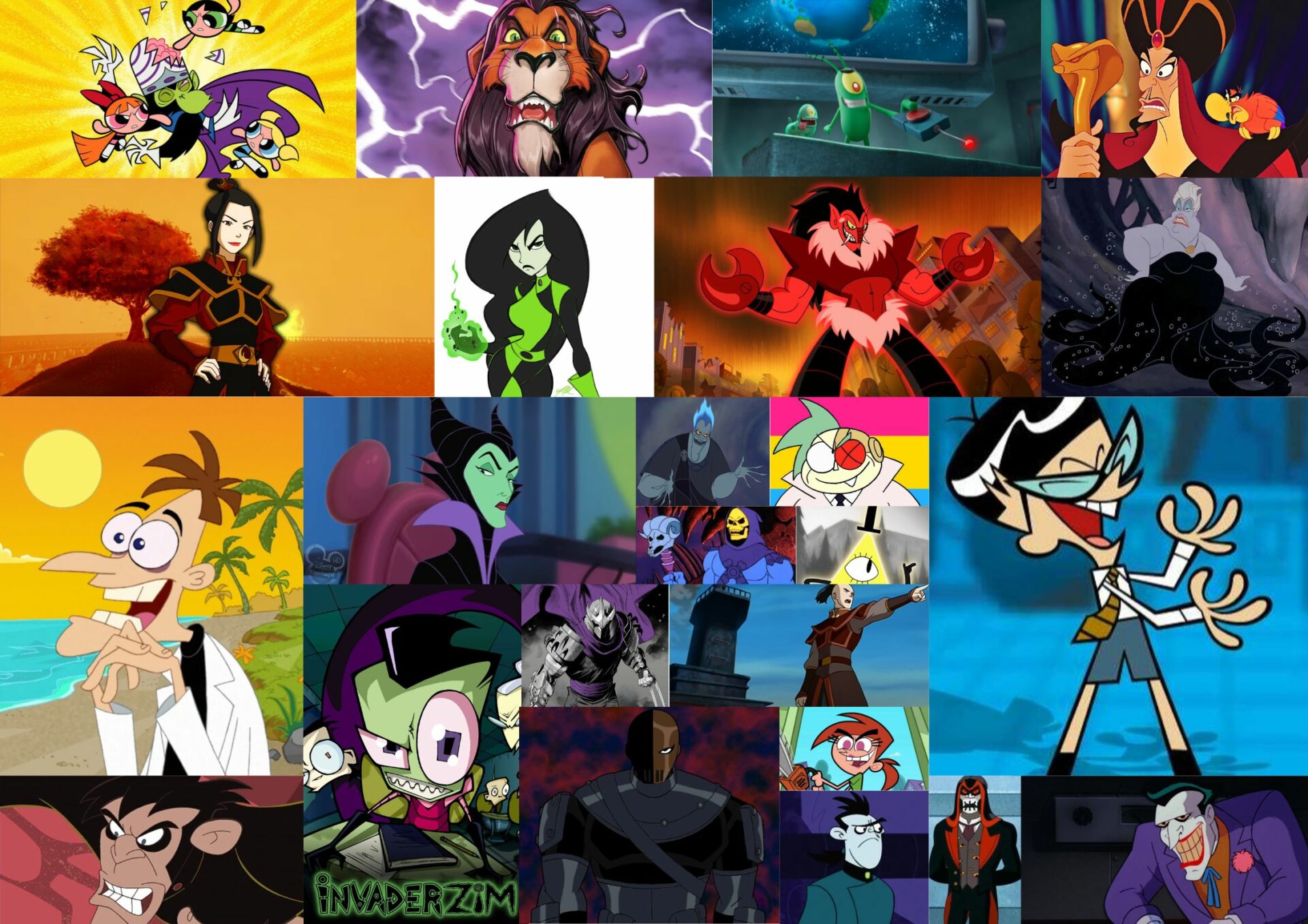
Our list rounds up the top 30 cartoon characters that were villains, each one more wonderfully wicked than the last.
READ MORE
February 26, 2026 .
Cartoons, Lists
There are some outright funny cartoon characters who exist solely to crack you up, loud, hard, and with zero apology.
READ MORE
October 28, 2025 .
Debates, Lists, Marvel, MCU
Every Marvel hero brings something to the table. But if we had to pick the top 8 most popular Marvel superheroes, who would make t...
READ MORE

July 20, 2025 .
Fantasy, Lists, Opinions
As a warrior, leader, and seeker of honor, Dalinar Kholin’s words often carry deep meaning. Here are ten of his top quotes i...
READ MORE
April 29, 2026 .
Lists, Opinions
The Mouse is famous for its princesses and princes. However, the studio’s true genius lies in its embrace of “ugly Disney ch...
READ MORE
November 27, 2025 .
Lists, Mythology
While this isn’t an exhaustive list, it comprises some of the most popular mythical creatures from around the world.
READ MORE

July 20, 2025 .
Lists
Things Fall Apart is for the colonizers as well as the colonized, helping to understand the role of colonialism in the realization...
READ MORE
Get our magazine for free!