
Close menu
Ranking the best of African Literature


















































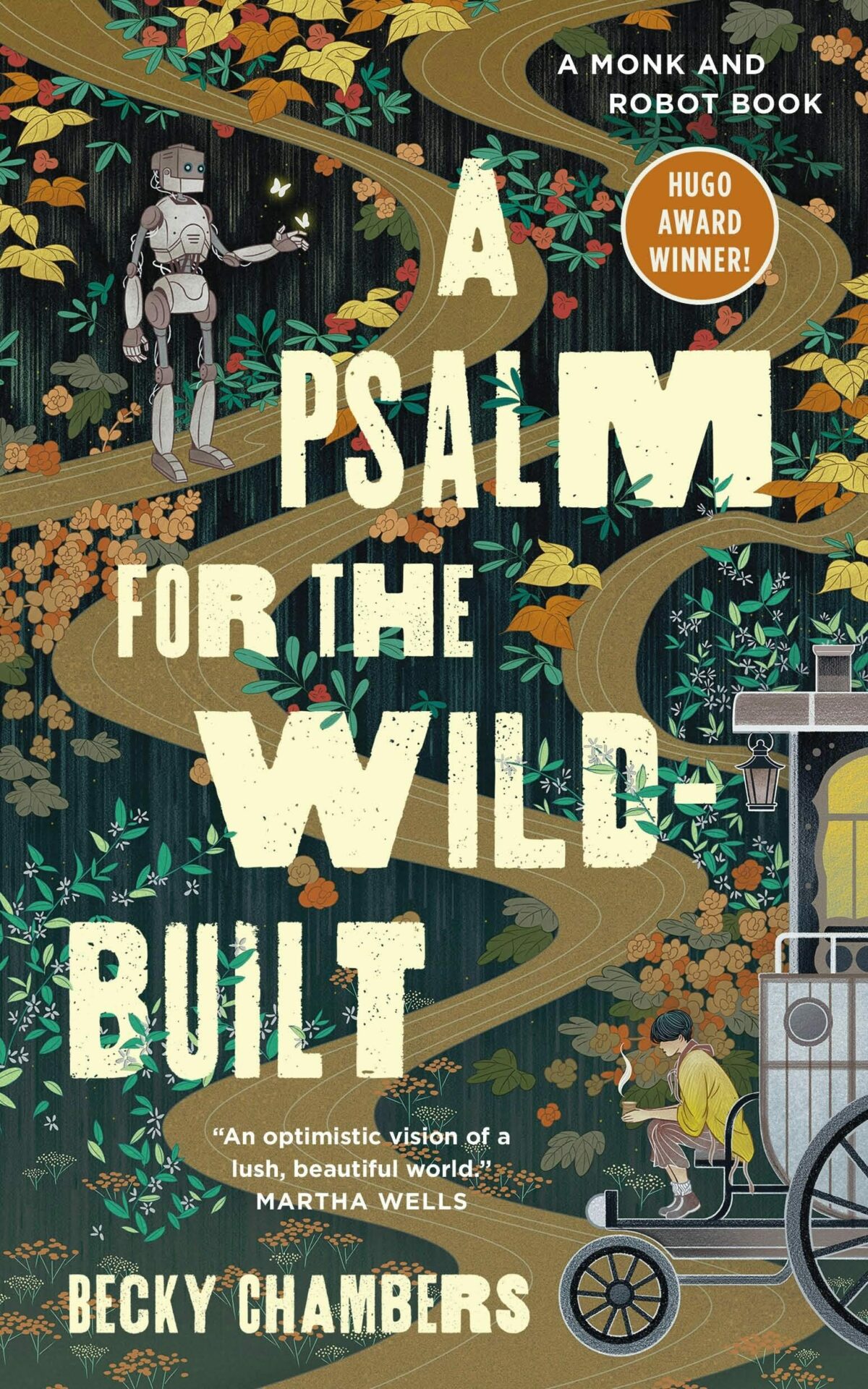
The world-building in A Psalm for the Wild-Built can only be described as intricate, meticulous, and immersive.
“All we have ever known is a life of human design, from our bodies to our work to the buildings we are housed in. We thank you for not keeping us here against our will, and we mean no disrespect to your offer, but it is our wish to leave your cities entirely, so that we may observe that which has no design—the untouched wilderness.”
Apologies for the sheer number of quotes embedded in this review. I just couldn’t help myself as I’d hardly go past a couple of pages without highlighting something truly spellbinding and mesmerizing in its poignancy and simplicity.
I only deign to lay the blame on the fact that I’ve tried to limit it to those appearing within the first one-fifth of the book. Forthwith comes my ramblings; please read on.
The worldbuilding in A Psalm for the Wild-Built can only be described as intricate, meticulous, and immersive.
There’s a sublime yet profound sense of immersion within the world being viewed that juxtaposes unique worldbuilding with characterisation and plot (although the plotline does seem quite slim) simultaneously. I think it’s brilliant.
When they looked up at the skyscrapers, they no longer marveled at their height but despaired at their density—endless stacks of humanity, packed in so close that the vines that covered their engineered casein frames could lock tendrils with one another. The intense feeling of containment within the City became intolerable. Dex wanted to inhabit a place that spread not up but out. Fifty percent of Panga’s single continent was designated for human use; the rest was left to nature, and the ocean was barely touched at all. It was a crazy split, if you thought about it: half the land for a single species, half for the hundreds of thousands of others. But then, humans had a knack for throwing things out of balance. Finding a limit they’d stick to was victory enough.
A forest floor, the Woodland villagers knew, is a living thing. Vast civilizations lay within the mosaic of dirt: hymenopteran labyrinths, rodential panic rooms, life-giving airways sculpted by the traffic of worms, hopeful spiders’ hunting cabins, crash pads for nomadic beetles, trees shyly locking toes with one another. It was here that you’d find the resourcefulness of rot, the wholeness of fungi. Disturbing these lives through digging was a violence—though sometimes a needed one, as demonstrated by the birds and white skunks who brashly kicked the humus away in necessary pursuit of a full belly. Still, the human residents of this place were judicious about what constituted actual necessity, and as such, disturbed the ground as little as possible. Careful trails were cut, of course, and some objects—cisterns, power junctions, trade vehicles, and so on—had no option but to live full-bodied on the ground.
Although there will be no need for me to tag this review’ highly recommended’ as per usual in most reviews of books that I like, I will say this: I’ve slept on a very talented author for a long time mostly due to the overly optimistic worldview cited by most reviews I’ve read on her works. I do like my Sci-Fi utopia to come with a bit of darkness, a la Peter F. Hamilton types or even Reynolds’ pessimistic paints (he does dash some optimism here and there), so I guess I was indeed pleasantly surprised to enjoy and relate to Chambers’ style.
It shows I’m gonna have quite a blast with her other works.
I love the subtle implication in A Psalm for the Wild-Built that even though the various human sects differ considerably in the pursuit of their shared beliefs, they do indeed share (and most importantly have already agreed/come to terms with all that it implies) a unifying mythological/spiritual ethos.
To me, it shows that this hypothetical human utopia has finally come to some spiritual concensus in their diverse underlying mythos which highlights yet another ‘failing’ (imo) that humanity as a whole struggles with in this age of our supposed enlightenment considering the lack of tolerance within the religious spheres of peoples of varying beliefs even through our/their irrefutable sharing in the same root underlying mythologies across almost all current religious and even aboriginal/folklore spritualist theologies.
“Cosmites argue that when that balance shifted, when extractive factories stayed open all twenty hours of the day without a single pair of human hands at work in them—despite the desperate need for those same hands to find some sort, any sort of employment—Chal intervened. We had bastardized constructs to the point that it was killing us. Simply put, Chal took our toys away.
Or, the Ecologians would retort, Bosh was restoring balance before we made Panga uninhabitable for humans.
Or, the Charismists would chime in, both are responsible, and we should take this as evidence that Chal is Bosh’s favored of the Child Gods (this would derail the entire conversation, as the Charismists’ fringe belief that gods are conscious and emotive in a way similar to humans is the best possible way to get other sectarians hopping mad).
Or, the Essentialists would add wearily from across the room, the fact that we can’t agree on this at all, the fact that machines seemingly no more complex than a pocket computer suddenly woke up, for reasons no one then or since has been able to determine, means we can stop fighting and place the whole matter squarely at the metaphorical feet of Samafar.For my part, whatever domain robot consciousness originated in, I believe leaving the question with the God of Mysteries is a sound decision…”
—Brother Gil, From the Brink: A Spiritual Retrospective on the Factory Age and the Early Transition Era
The rich, verdant, and aromatic description that Chambers has depicted (within this ode to Gaeia/Mother Earth/Divine Feminine Aspect) contains an understated elegance in the prose for the growth of beautiful and lovely thoughts of nature, the ecosystem and our place in it, in the imagination of her readers…
Milky green hot springs came into view a few minutes later, as expected, as well as the smooth white dome of the energy plant standing alongside, exhaling steam through its chimneys. There had been nothing like this in the Shrublands, where Dex had woken up that morning. There, you’d find solar farms built in untended fields, which smelled of sun-warmed scrub and wildflowers. In a week’s time, there’d be yet another transition, as Dex’s route took them back out of the Timberfall and down to the Buckland coast, where the salty air kept wind blades spinning. But for now, Dex would keep company with the scent of the forest. The sulfur of the springs was quickly subsumed by fresh evergreen as Dex pedaled onward, and before long, ground-level buildings like the geothermal plant were few and far between.
The hanging homes here looked akin to shells, cut open to reveal soft geometry. Everything there curved—the rain-shielding roofs, the light-giving windows, the bridges running between like jewelry. The wood was all gathered from unsuitable structures no longer in use, or harvested from trees that had needed nothing more than mud and gravity to bring them down. There was nothing splintered or rough about the lumber, though; Inkthorn’s craftspeople had polished the grain so smooth that from a distance, it looked almost like clay.The village’s practical features were ubiquitous—powered pulleys to bring heavier goods up and down, emergency ladders ready to drop at a moment’s notice, bulbous biogas digesters attached outside kitchen walls—but every home had a unique character, a little whim of the builders. This one had a deck that danced around the house in a spiral, that one had a bubbled skylight, the other had a tree growing through it rather than beside. The homes were like trees themselves in that regard—unmistakably part of a specific visual category, yet each an individual unto itself.
A Psalm for the Wild-Built is a must-read for anyone interested in reading a book wherein one’s imagination of the most beautiful and natural ecological system sits in perfect harmony with superb science that could be theoretically achievable in this present time, if only…
“Without constructs, you will unravel few mysteries. Without knowledge of the mysteries, your constructs will fail. These pursuits are what make us, but without comfort, you will lack the strength to sustain either.”

An obsessive compulsive Sci-Fi/Fantasy enthusiast || INTP hermit || Lover of all things Esoteric and Arcane

July 20, 2025 .
Animation, Lists
Our list rounds up the top 30 cartoon characters that were villains, each one more wonderfully wicked than the last.
READ MORE

May 6, 2026 .
Lists, MCU
Spider-Man is one of the many superheroes from the Marvel Universe whose stories shaped many childhoods. Who is your strongest Spiderman?
READ MORE
April 29, 2026 .
Lists, Opinions
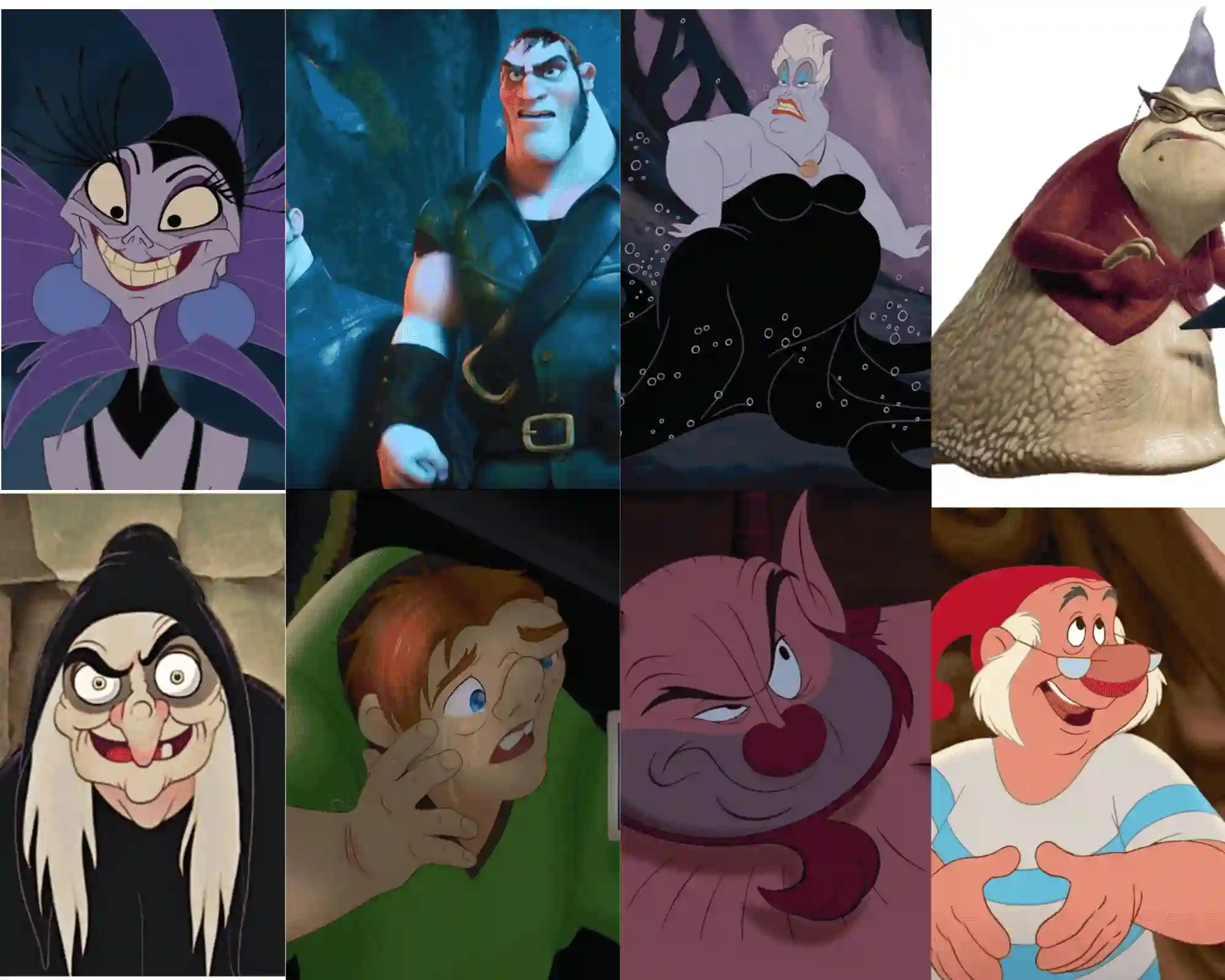
The Mouse is famous for its princesses and princes. However, the studio’s true genius lies in its embrace of “ugly Disney characters”.
READ MORE

October 28, 2025 .
Lists, Marvel, MCU, Opinions
Let’s go through a list of the top 7 strongest Marvel villains, from the wickedly powerful to the absolutely unstoppable.
READ MORE

February 26, 2026 .
Cartoons, Lists
There are some outright funny cartoon characters who exist solely to crack you up, loud, hard, and with zero apology.
READ MORE


Get our magazine for free!