



























This concerns gender as representation, role, and social meaning, and how societies organised people prior to colonial disruption.
When we think about gender today, it’s easy to assume that “male” and “female” are the only two options, rigid, obvious, and universal and understandable.
That’s a very modern, Western-influenced view.
A few centuries ago, precolonial African societies practiced far more fluid, socially embedded, and dynamic gender roles than is often recognized. People’s roles, spiritual duties, and communal contributions usually defined their “gender” far more than anatomy ever did.
Across the continent, historical and anthropological research shows that gender nonconformity was not only visible but also respected and institutionalized. Among the Igbo, women could take on male social roles, marry other women, and manage property and lineage, as explored in Ifi Amadiume’s Male Daughters, Female Husbands.
In Yoruba land, the very concept of fixed male/female categories was disrupted by social practice and function, a perspective detailed in Oyèrónkẹ́ Oyěwùmí’s The Invention of Women.
And in Angola, the Chibados: men living as women, occupied spiritual and political positions, with full societal recognition, as highlighted in various historical studies, including Marc Epprecht’s Heterosexual Africa?.
These examples reveal that gender fluidity wasn’t a Western import or a modern “trend.” It was a lived reality, often central to how communities functioned and how social, spiritual, and political life was organized. Understanding this past not only challenges contemporary assumptions about gender but also shines a light on the ways colonialism reshaped and erased indigenous understandings of identity.
Using these books as a centre for this discussion, we will delve into the sensitive issue of gender preferences, but not to prove right or wrong, or in terms of sexual orientation, but as a societal construct.
Before we go any further, let’s clear something up. This is not about sex, desire, or morality. This concerns gender as representation, role, and social meaning, and how societies organised people prior to colonial disruption.
Pre-colonial African societies didn’t ask, “Is this right or wrong? The focus was “What role does this person play?”
Let us start with a question that often prompts pause: What if “man” and “woman” were also social positions, not merely biological assignments?
Fight the urge to run away and stay with me.
That’s basically the intellectual grenade Ifi Amadiume drops in Male Daughters, Female Husbands. Writing about pre-colonial Igbo society, Amadiume shows that gender was not fixed at birth. Instead, it was flexible, situational/ contextual, and deeply tied to power, lineage, and responsibility.
In Igbo communities, a woman could become a female husband, not as a disguise, not as a rebellion, but as a recognized social role. She could marry a woman, pay bride price, control property, and continue a lineage. Importantly, this had nothing to do with sexual orientation in the modern sense. It was about social function. Gender here was something you did, an action, a role to be fulfilled, not just your biology.
Amadiume’s work compels readers to confront an uncomfortable truth: precolonial Igbo society already understood that biology alone was not destiny. Colonial administrators and missionaries, however, found this system confusing, even threatening, and gradually replaced it with rigid European gender norms that lacked depth or heart.
The hook here is simple but powerful:
If Igbo society could imagine gender as flexible centuries ago, why do we insist it’s a “new idea” today? And why is its representation predominantly sexual? If you claim to be cross-gendered, then fleshly indulgence cannot be the only manifestation of who you are.

In traditional Igbo society, inheritance and lineage followed a male-centred system. Land and ancestral continuity passed through sons, leaving families without male offspring at risk of losing their lineage. Igba Ndu emerged as a cultural response to this problem.
Igba Ndu, meaning “life-bond” or “covenant,” was a solemn ritual agreement believed to be spiritually binding. Through this rite, a man could confer the social status of a male child on his first daughter. From that moment, she was recognised not as a female heir but as a male daughter, entrusted with duties usually reserved for sons.
This shift was not symbolic alone; it reshaped the daughter’s social life. She was expected to remain within the family compound and was therefore barred from marriage, ensuring that lineage, property, and ancestral obligations stayed intact. In this context, her gender was defined by her responsibilities and roles rather than by biological sex.
While this process did not overturn patriarchy, it operated within it. Yet it reveals something crucial about pre-colonial Igbo philosophy: gender could be ritually reassigned through communal agreement when social stability required it. Igbo societies understood that gender could be altered to suit social function.
Closely related is the concept of Nwanyi Bụ, which literally translates to “a woman is a husband.” This wasn’t only poetic language, it was also descriptive.
In Igbo thought and philosophy, gender could shift according to economic power, social responsibilities, and lineage needs. A woman who fulfilled the duties of a man became a man in the social sense. Masculinity here was not about anatomy but authority, obligation, and public function. Gender was relational and functional.
Picture a prosperous Igbo town. A senior woman who is wealthy, respected, and long past the age where motherhood defines her value, trades palm produce and livestock in nearby markets; Her household is large, her word carries weight, yet she has no biological children; In a society where lineage continuity matters, this is not a dead end but a problem with a cultural solution.
She takes a younger woman into her household as a wife; brideprice is paid; elders witness the arrangement; The marriage is recognised not as romance, but as strategy and continuity; The older woman now occupies the social role of her husband, not because she has become male, but because she has assumed male responsibility.
The younger wife later bears a son through a male consort of her choosing; if the benefactor is kind, she may allow her to choose; sometimes the choice is made for the wife. However, the child belongs, legally and socially, to the husband’s female lineage; he bears her name and will inherit her property.
As is the case with humans, conflict may arise later, as it often does. The child’s birth father may seek recognition, or the mother may hesitate. But, left to tradition, the custom is clear: fatherhood here is not about sex but about social positioning.
This arrangement was not regarded as scandalous, secret, or marginal; It is public, regulated, and understood.
What this reveals is crucial: pre-colonial Igbo society could separate gendered roles from biological sex without collapsing social order.

Oyèrónkẹ́ Oyěwùmí doesn’t merely challenge gender binaries in her book; in The Invention of Women, she questions whether gender, as we understand it today, even existed in precolonial Yoruba society.
In The Invention of Women, Oyěwùmí argues that Western scholars made a significant mistake: they assumed that European gender categories applied everywhere. However, in Yoruba society, social organization was not based primarily on gender. It was structured around seniority, lineage, and relational roles.
In other words, who had authority wasn’t only about being “male” or “female,” but about age, position in the family, and social responsibility. Language itself reflects this: Yoruba terms did not rigidly encode gender as English does. Power wasn’t automatically masculine, and subordination wasn’t automatically feminine.
What colonialism did, Oyěwùmí argues, was to force gender into places it didn’t previously dominate. Colonial rule, Christianity, and Western education restructured Yoruba society using European assumptions, creating “women” as a political and social category in a way that hadn’t existed before.
The quiet but unsettling hook here is this: If gender wasn’t the primary way Yoruba people understood themselves, then how much of today’s gender anxiety is actually inherited, not indigenous?

Hausa society before colonial interruption, and even before complete Islamic consolidation, was far more layered than it is often remembered. Gender was not a single, fixed identity determined at birth, but a social position shaped by roles, responsibilities, and communal functions.
One of the clearest examples of this is the yan daudu. Individuals in this category were typically assigned male at birth but adopted feminine modes of dress, speech, labour, and social interaction.
They were visible in urban centres and associated with particular economic and ritual spaces; entertainment, domestic organisation, and spirit-related practices. Crucially, they were not understood primarily through sexuality or moral judgment. They occupied a recognised gendered position that was neither entirely male nor simply “woman,” but one that had its place within the social order.
This flexibility becomes even clearer when viewed through the lens of the Maguzawa and Hausa communities that retained pre-Islamic religious and social systems. Among the Maguzawa, gender roles were less rigid and less moralised. Women could own property, initiate divorce, and exercise public authority without these actions being framed as transgressive. Authority was not inherently masculine; it was situational and earned.
The institution of the Magajiya illustrates this vividly. As a recognised female title-holder, the Magajiya oversaw markets, women’s affairs, or specific communal functions, wielding real social and political influence. She did not need to become “male” to lead. Her role existed because society recognised leadership as a function rather than a biological destiny.
Over time, Islamic reform movements and colonial administration narrowed these flexible systems. Gendered roles that once made social sense were reinterpreted through imported moral frameworks, transforming social categories into moral problems. What had functioned as gender-as-role became reframed as deviation.
Yet the historical record remains clear: Hausa society, like many pre-colonial African societies, operated with a nuanced understanding of gender, one that allowed neutrality, fluidity, and variation.
Marc Epprecht’s Heterosexual Africa? tackles one of the most stubborn myths still floating around: that Africa has always been uniformly heterosexual and hostile to gender or sexual diversity. This tickles me a lot.
Using colonial records, missionary accounts, and African oral histories, Epprecht shows that gender variance and same-sex practices were visible across many African societies, including roles that didn’t neatly align with male/female expectations as we know them now. One striking example comes from Central and Southern Africa, where individuals assigned male at birth lived as women and were recognized members of society, occupying spiritual and social roles.
Epprecht’s key argument is that the idea of a uniformly “heterosexual Africa” was manufactured mainly during the colonial period, when European powers imposed legal codes and moral frameworks rooted in Victorian Christianity.
The hook here lands hard: If colonialism had to work this hard to enforce heterosexuality and rigid gender roles, maybe they weren’t as “natural” as we’ve been told. The fact that these groups exist is a testament to this.
Taken together, these works do something radical but quiet: they remind us that gender fluidity, role-shifting, and non-binary social identities are not modern inventions. They existed, they functioned, and they made sense within their cultural worlds.
Consider a confident, effeminate man who lives alone in his village yet commands respect. While such a character is rare in canonical Nigerian novels, similar figures appear in contemporary literature: Ebele in Jude Dibia’s Walking with Shadows, for instance, navigates society with fluid gender expression while retaining agency and social recognition
This isn’t about projecting modern LGBTQ+ labels onto the past. It’s about showing that human societies have always found more than one way to organize identity. That everyone had a place. The questions are:
Let’s be very clear, especially for the reader tempted to turn this into a theological debate.
This article is not asking:
That is a different conversation entirely.
This article is about the representation of gender, not sex. It examines how societies understood roles, identity, and social order before colonial disruption. It is about remembering that African societies were not intellectually regressed or socially rigid; they were adaptive, pragmatic, and nuanced.
And perhaps the most unsettling question this history raises is not “Was this right?” but rather, why did we forget that it was possible? Is it possible to live harmoniously with people who do not necessarily approach life the same way as us?
Hi I'm Tega, I am a microbiologist with a lifelong passion for reading, I fell in love with books as child (where I was briefly obsessed with Enid Blyton, lol) reading is simply my escape and hobby and sometimes doubles as therapy for me . My favorite genres are African lit, historical fiction, memoirs/biographies and fantasy. I do beta reading and post book reviews which you can check out on my Instagram @ te_ga_o.
June 25, 2026 .
Lists, Opinions
If Game of Thrones taught us anything, it’s that the characters we hate the most tend to outlive everyone else.
READ MORE
July 20, 2025 .
Animation, Lists
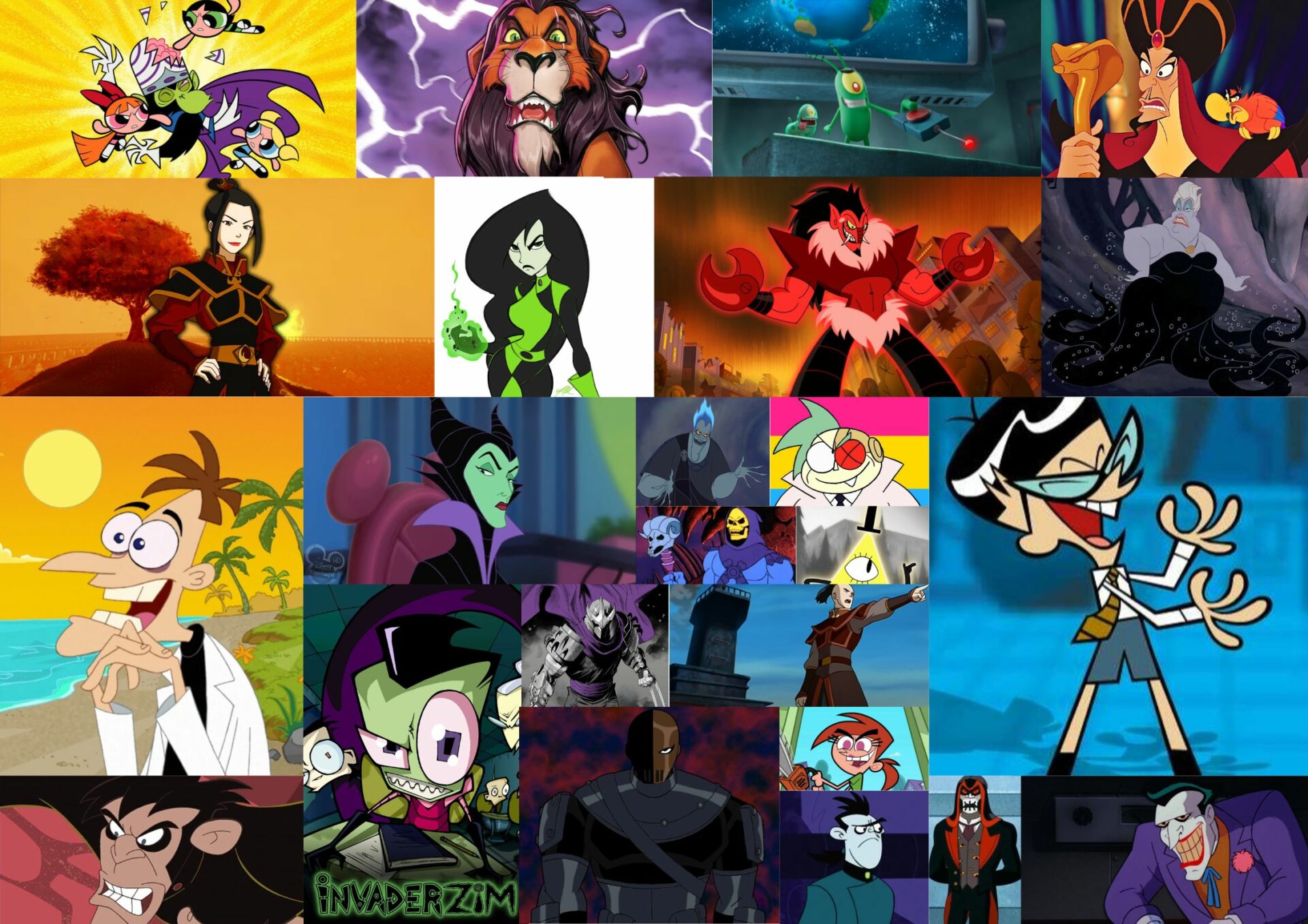
Our list rounds up the top 30 cartoon characters that were villains, each one more wonderfully wicked than the last.
READ MORE
October 28, 2025 .
Lists, Marvel, MCU, Opinions
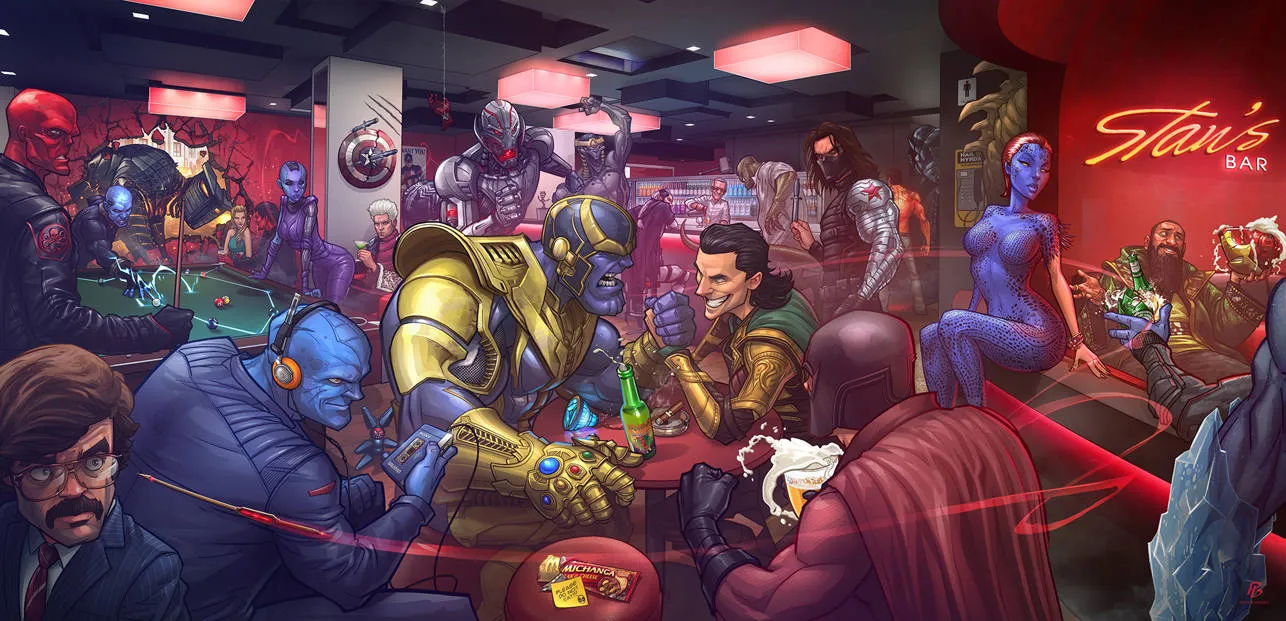
Let’s go through a list of the top 7 strongest Marvel villains, from the wickedly powerful to the absolutely unstoppable. ...
READ MORE
February 26, 2026 .
Cartoons, Lists
There are some outright funny cartoon characters who exist solely to crack you up, loud, hard, and with zero apology.
READ MORE
April 29, 2026 .
Lists, Opinions
The Mouse is famous for its princesses and princes. However, the studio’s true genius lies in its embrace of “ugly Disney ch...
READ MORE

November 27, 2025 .
Lists, Mythology
While this isn’t an exhaustive list, it comprises some of the most popular mythical creatures from around the world.
READ MORE

October 28, 2025 .
Debates, Lists, Marvel, MCU
Every Marvel hero brings something to the table. But if we had to pick the top 8 most popular Marvel superheroes, who would make t...
READ MORE
Get our magazine for free!