
Menu




















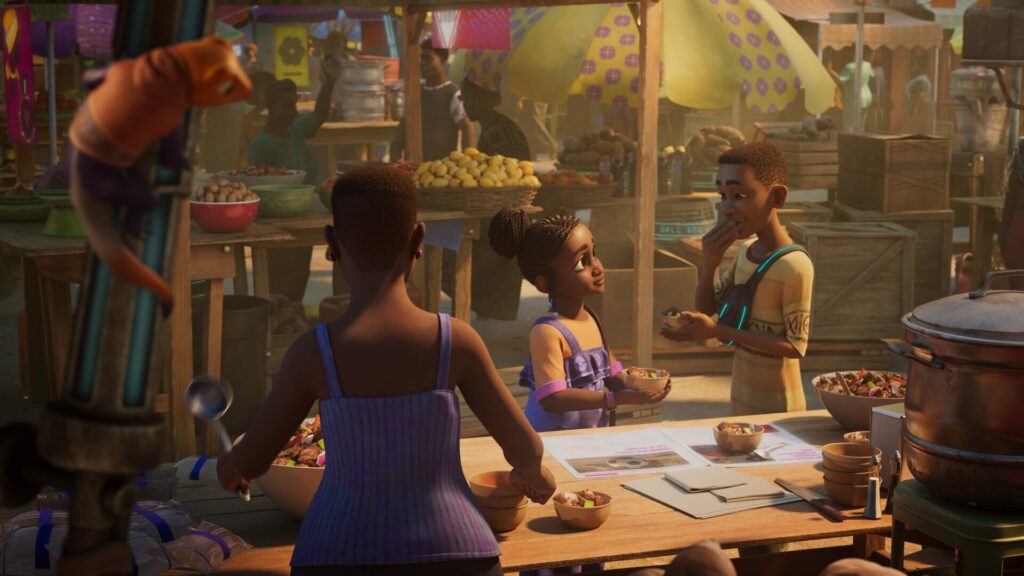
It was exciting to watch the uncouth craze of the Lagos daily bustle combine seamlessly with sophisticated technology in Iwájú.

It is pretty ironic that a first-of-its-kind Nigerian animation production is initially made available on Disney+, a streaming platform that’s unavailable in the country, about two months before locals can finally access it.
Indeed, it is quite telling that Iwájú (Forward/Progress/Future/Ahead/Front), a groundbreaking pioneer heralding the future of Nigerian and African animation, also reminds us of how backward we are in key industries, including the intersection of technology and entertainment.
With time running out, Tunde has to find the resources to sate the appetite of the insatiable gang boss, Bode de Sousa.
Can he and his daughter escape their claws, and what role will technology play in their deliverance or doom?
Iwájú is a classic kidnap-for-ransom tale familiar to anyone with half their roots in Nigerian soil, told from the perspectives of the kidnapper and his victims.
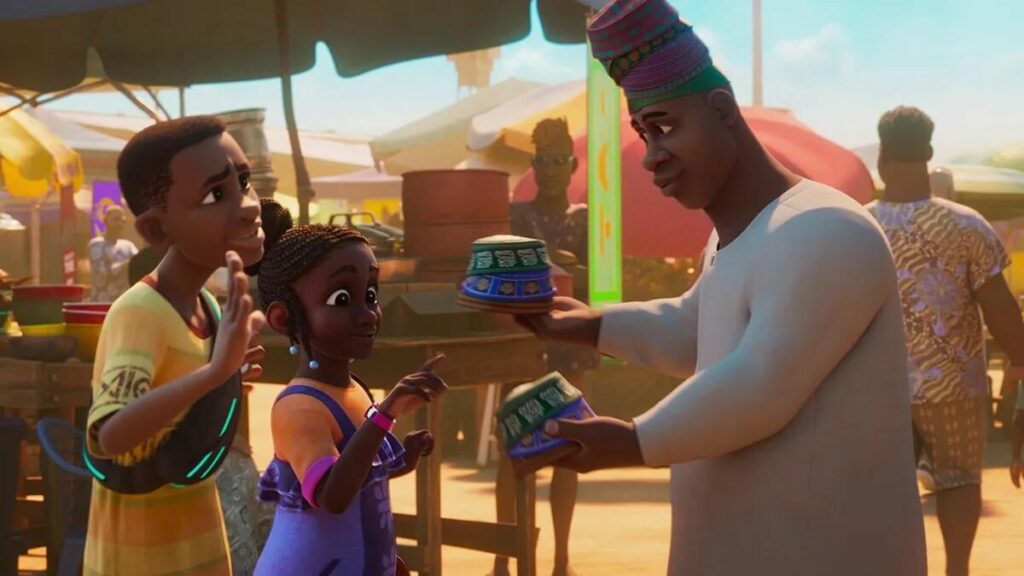
The life of a privileged child born and bred on the “Island” is juxtaposed with that of a street rat raised in the slums of Ajegunle on the “Mainland.” Throughout the story’s telling, we see this dichotomy typified in every aspect of the production, including the animation design and dialogue.
This particular subplot is far from unique, as the classic economic gulf between the two main regions of real-world Lagos has been depicted so many times and in so many diverse forms that it is almost mythical.
Still, due credit to Iwájú’s writers for portraying the rich-poor Lagos divide as richly as they did. However, the story was only one of the bright sparks of a genuinely promising star whose lights only weakly flickered with each new episode.
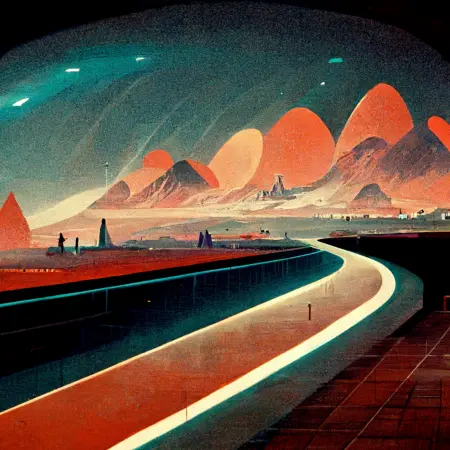
It was pretty exciting to see a futuristic Lagos depicted, even in less-than-satisfying animation.
Still, the combination of Kugali Media and Walt Disney was always going to be a compromise of artistic ideas, and elements of the production suffered as a result.
Using established movie stars to voice the characters in Iwájú’s was always going to be a slippery slope. Perhaps the animation development team thought that the star power would make Iwájú an instant magnet for the Nigerian viewership, but all it did was fail to prop up an average script.
Still, there were a few positives.
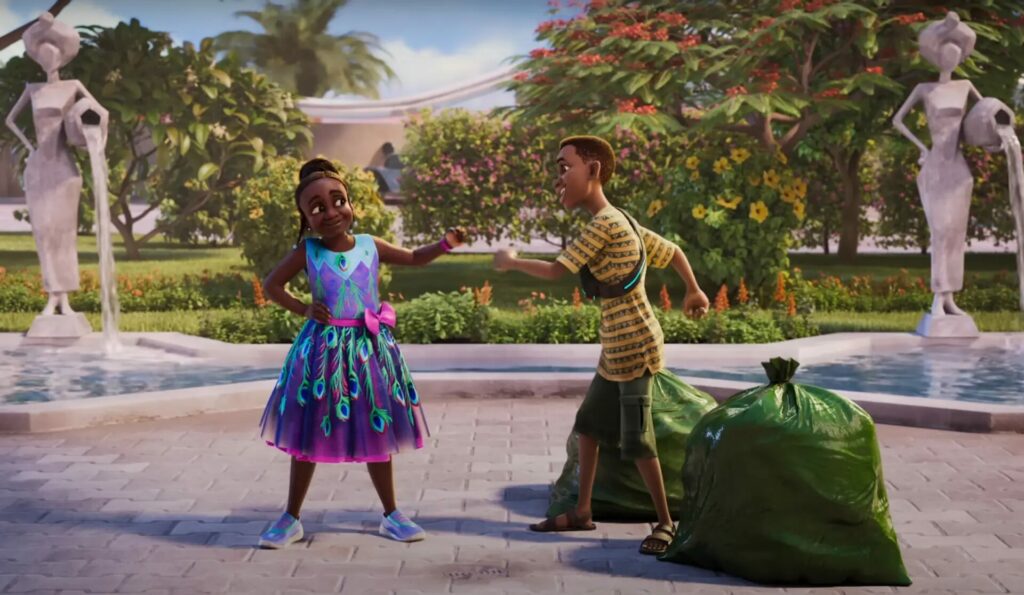
Simisola Gbadamosi, fresh into the voice-acting industry, lit up her character, Tola, with her exciting trill and amusing layering of Western English accents over Yoruba and Pidgin English. Her unique voice helped bring the character to life, perfectly portraying the overenthusiastic and privileged “Islander” with an adventurous soul.
Even in her limited role, Adire star Kehinde Bankole’s voice shines through, and her perfect Yoruba is a blessed welcome from the unauthentic accents that watered down much of the animation’s overall audio experience.
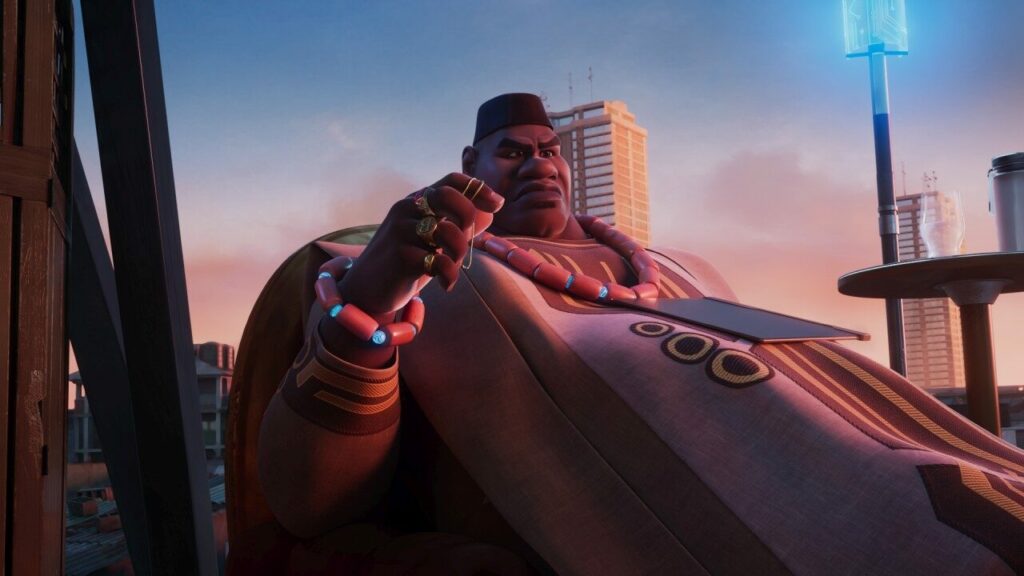
Best of all was the booming, confident voice of Nollywood veteran Femi Branch, whose unique voice brooked no argument to his claim to being the big criminal boss. Of all the voice actors in Iwájú, Femi Branch’s depiction of Bode de Souza was the most convincing. The idea to include all the Yoruba proverbs in his script was a stroke of genius, and his scenes were the most original for it.
On the other hand, the likes of Ireti Doyle, Bisola Aiyeola, Shaffy Bello, and Chioma “Chigurl” Omeruah in her multi-character voicing role all flattered to deceive, and their tones lacked none of Femi Branch’s conviction or Kehinde Bankole’s authenticity.
Still, these four were the middling performers, with the rest of the voice acting cast flat-out wrong choices for their respective roles.
Without Femi Branch’s solid portrayal of Iwájú’s main villain, Bode, the entire animation would have fallen flat on its face.
The non-Nigerian watcher of this animation might enjoy it all, regardless. Still, any extra sensitive member of the audience, especially one of Yoruba ethnicity, will be quick to spot the flaws, which, frankly, are a deterrent to enjoying Iwájú.
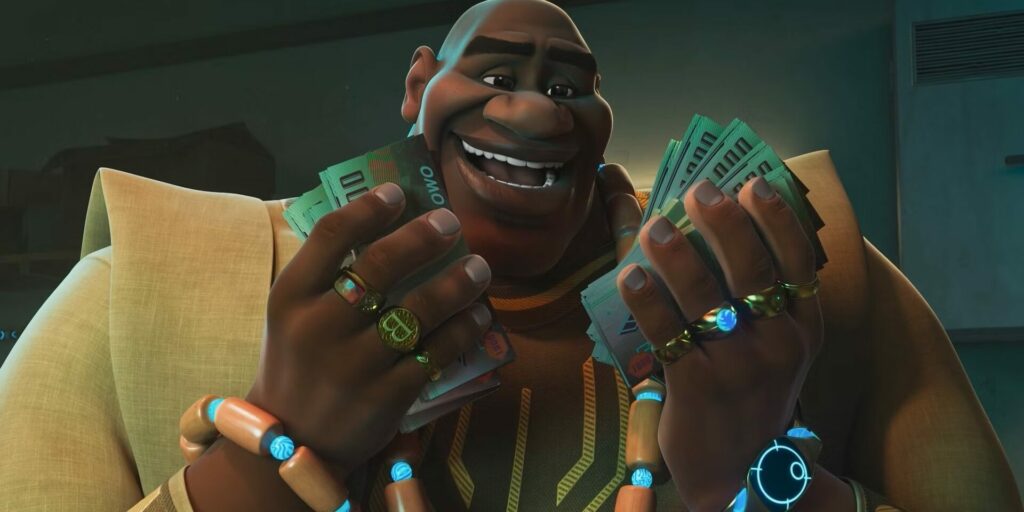
In Iwájú, the dialogue seemed forced at times, and the choice of voice actors made it worse. Some scenes are particularly cringe-worthy, as some of the actors struggled badly to cooly balance the Nigerian English accent with Queen’s English and Yoruba.
While some, like Femi Branch, pulled it off spectacularly, whether gutturally articulating Pidgin English, delivering a Yoruba proverb in all its tonal richness, or expressing a sentiment in properly accented Nigerian English, it was more or less awkward with the others, bordering on cringeworthy in some instances.
Still, the script wasn’t altogether bad; only the voice acting made it worse.
I’ve had a friend describe Iwájú’s animation as “rubbery,” and while it’s definitely not up to the lofty standards of some of Walt Disney’s best productions, I wouldn’t call it a flop either.
It was exciting to watch the uncouth craze of the Lagos daily bustle combine seamlessly with sophisticated technology in Iwájú.
The graphical depictions of the characters and their expressions were quite convincing. While some older adults will undoubtedly groan at the child-like animation, Iwájú is an excellent choice for a middle-grade audience.
For such a groundbreaking pan-African production, it would have been nice to listen to some apt, original Afrobeats to spice up the mostly unsatisfying audio experience.
As far as soundtracks go, nothing in Iwájú makes the authentic African ear tingle with delight, making the audience wonder, once again, at how much of Africa, Nigeria, and Yorubaland is genuinely in the production with the exception of a few thematic elements.
For the locals who will finally be able to watch all six episodes of Iwájú on the Disney Channel beginning on April 22, 2024, the TV mini-series promises to be yet another strangely thrilling watch.
Thrilling to see flying danfos and hawkers with more sophistication than usual. Strange, seeing yet more elements of our culture brought to the big screen.
As always, our stories continue to be told from the distorted lenses of Western perspectives, and while neutrals may smile and nod in approval at the exotic depictions, authentic Yoruba indigenes in the country and the diaspora will continue to grimace at this less-than-satisfying trend.
Regardless of my subjective opinions borne of a natural disillusionment with cultural misappropriation of Yoruba, Nigerian, and African narratives, Iwájú is a beautiful production grandly heralding to the world that our unique stories have formally arrived in animation.
Clear road!

The Tyrant Overlord. Fantasy buff and avid football fan.
15 Writing-Adjacent Careers for Writers Looking for a Career Change
Authors Spotlight: Khaled Hosseini
The Sound Souls Make When They Die by Chinemefun Chimuanya
If Nollywood Cast Our Favourite African Books: Who Would Play Who?
Best Films About Unexpected Age Gap Romance
Literary Awards and the Racism Card: A Wake-Up Call for Black Africa
Interview with the Vampire Relationships, Ranked
10 Top Recent Films for Action and Comedy Fans
Comma Rules Every Writer Should Know
10 Most Hype-worthy 2026 Book Releases (African Literature Version)
Five Gambling Films That Know the Bet Is Only Half the Story
Movies Where Poker Reveals Who a Character Really Is
July 20, 2025 .
Animation, Lists
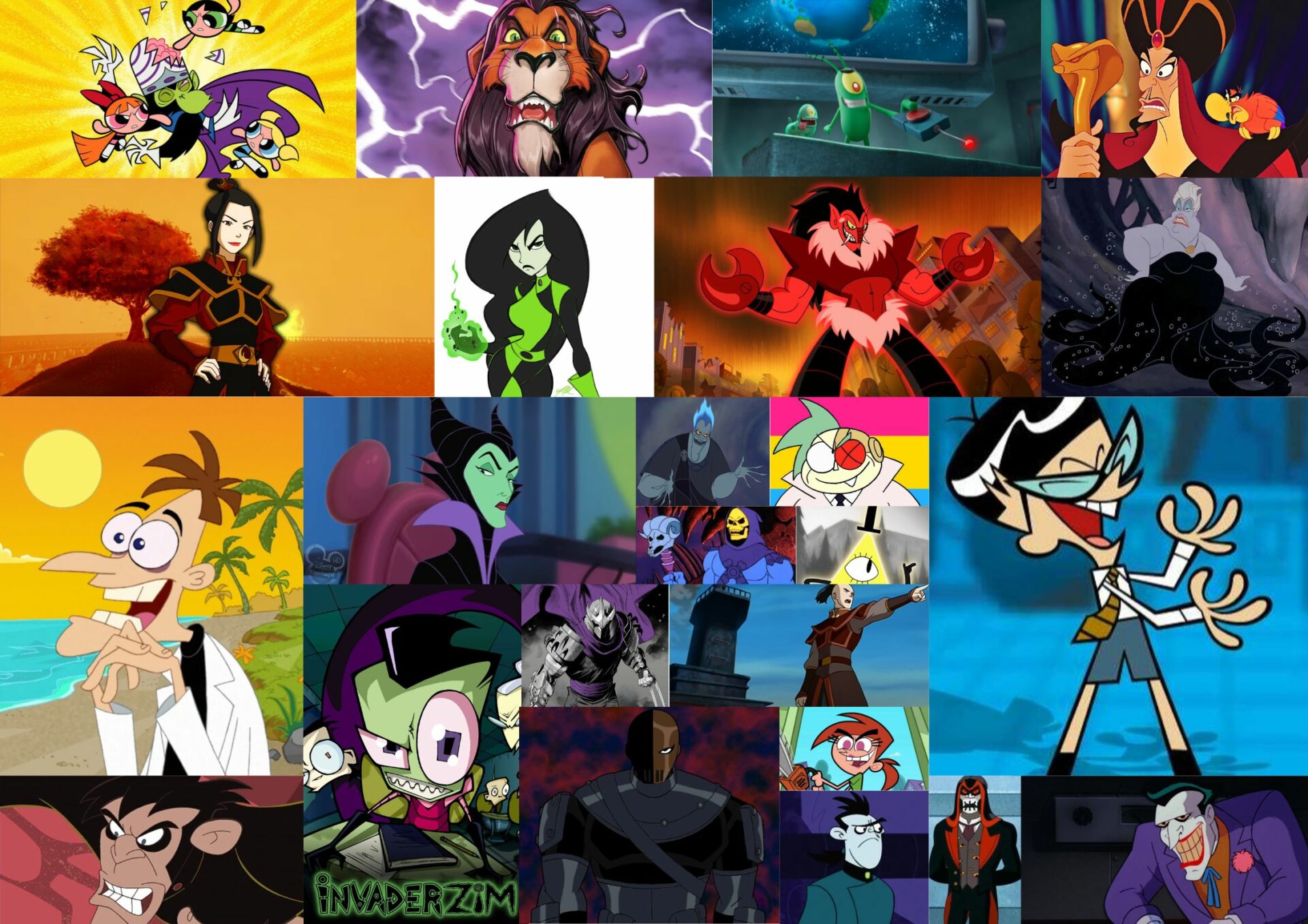
Our list rounds up the top 30 cartoon characters that were villains, each one more wonderfully wicked than the last.
READ MORE
November 27, 2025 .
Lists, Mythology
While this isn’t an exhaustive list, it comprises some of the most popular mythical creatures from around the world.
READ MORE
April 29, 2026 .
Lists, Opinions
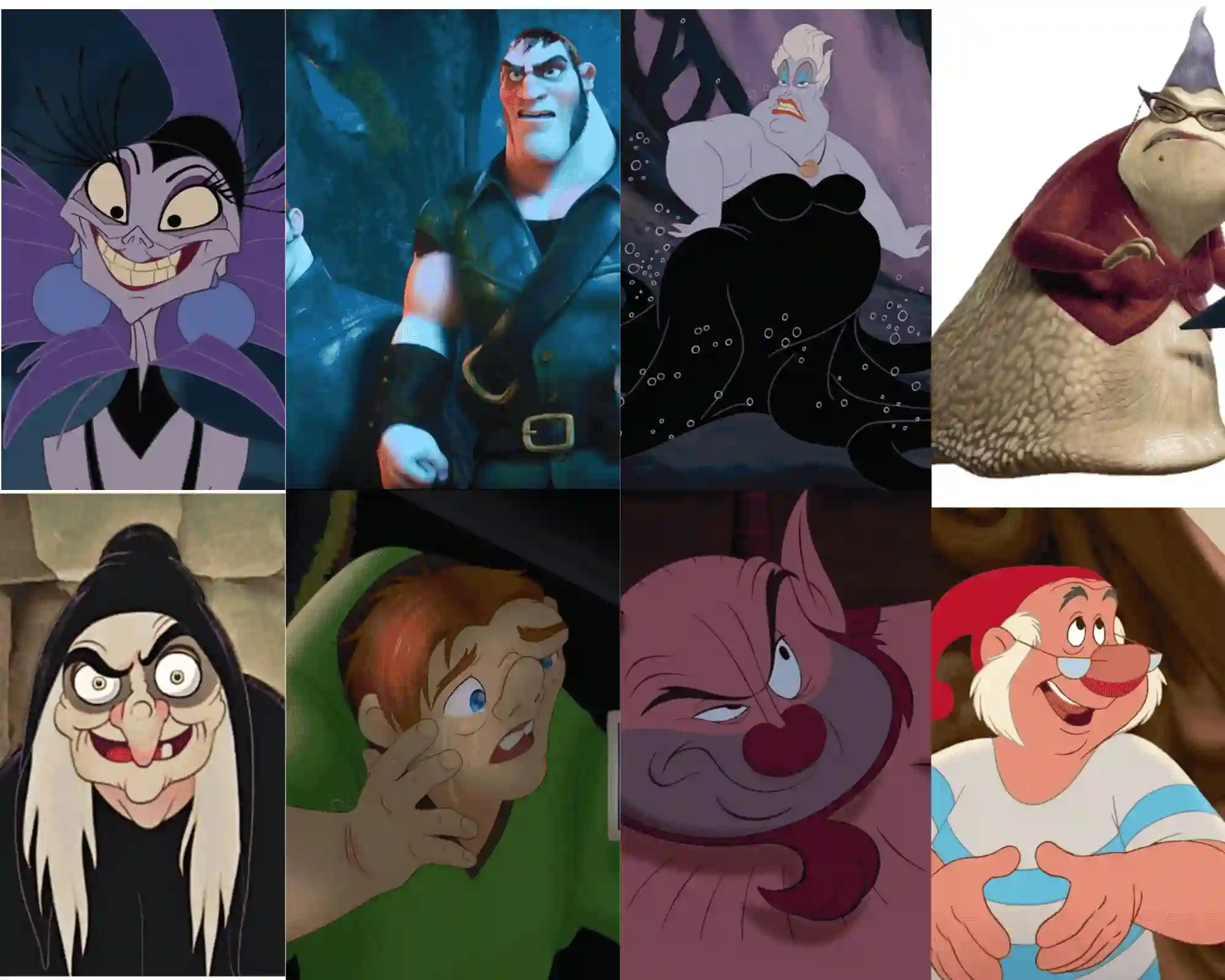
The Mouse is famous for its princesses and princes. However, the studio’s true genius lies in its embrace of “ugly Disney characters”.
READ MORE
October 28, 2025 .
Lists, Marvel, MCU, Opinions
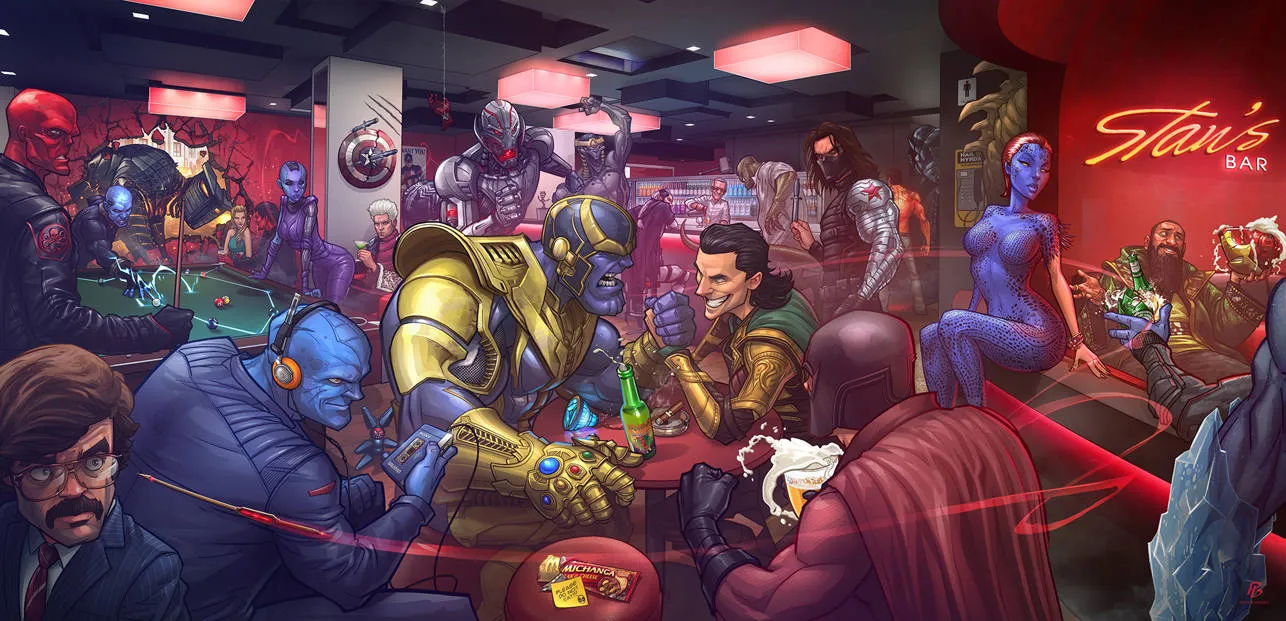
Let’s go through a list of the top 7 strongest Marvel villains, from the wickedly powerful to the absolutely unstoppable.
READ MORE
February 26, 2026 .
Cartoons, Lists
There are some outright funny cartoon characters who exist solely to crack you up, loud, hard, and with zero apology.
READ MORE
Get our magazine for free!