
Menu
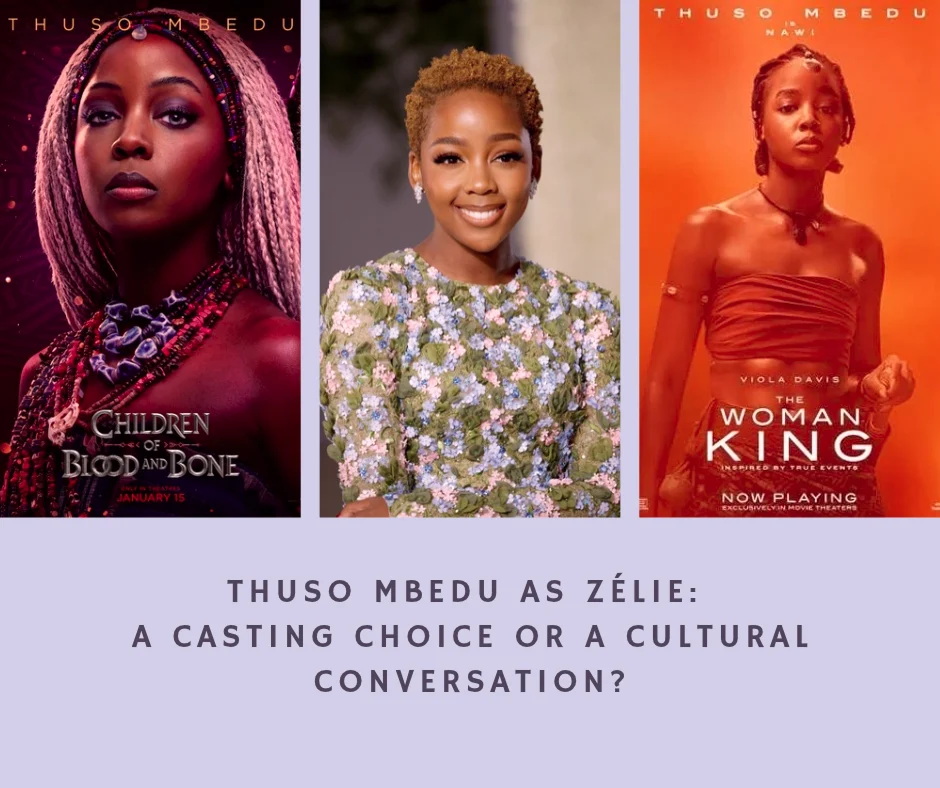



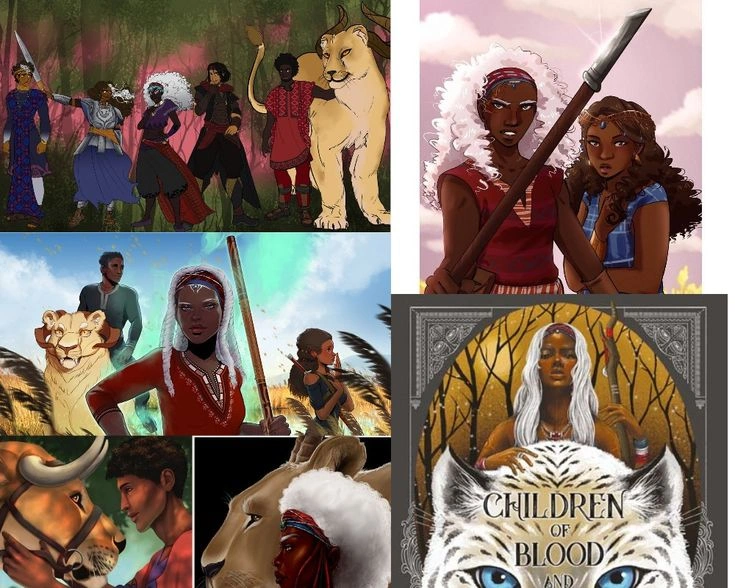
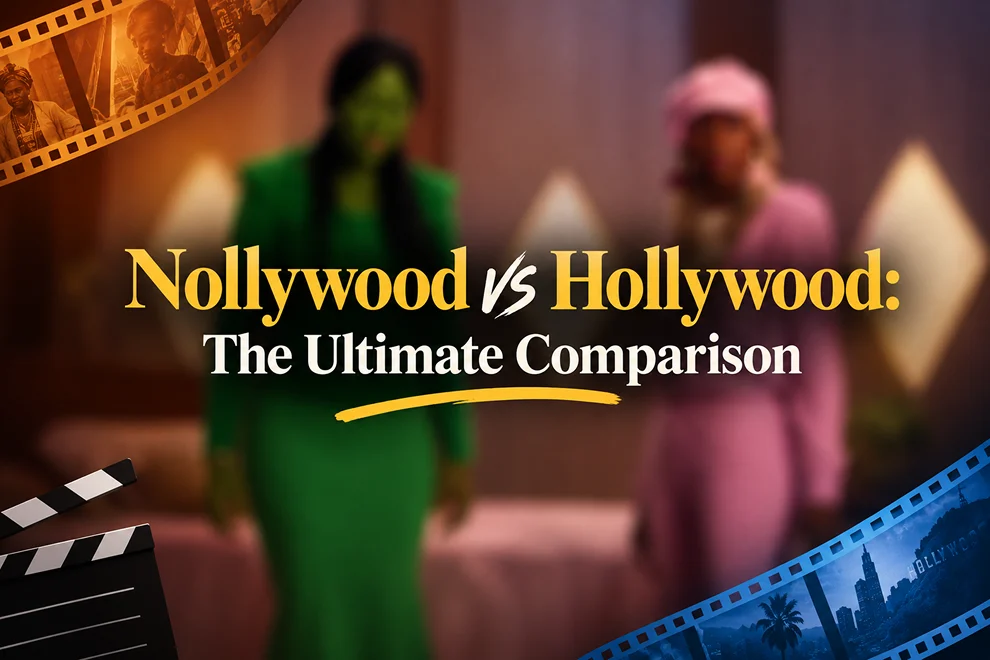






Thuso Mbedu’s casting as Zélie in Children of Blood and Bone leads us to explore were we draw the line between creative freedom and representation.
If you have been following the conversations around Children of Blood and Bone, you will know that Nigerians and South Africans have found yet another reason to occupy the same corner of the internet. This time, it is over a fictional kingdom, a very real actress, and a story inspired by Yoruba mythology.
The latest trailer for the film adaptation of Tomi Adeyemi’s bestselling novel has reignited the discourse. South African actress Thuso Mbedu plays Zélie Adebola, the young woman at the centre of the story.
Now, some viewers are excited about the casting, while others have questions, and a few have apparently decided that Orïsha’s citizenship must be settled before the film gets to cinemas. Whatever that means.
But beneath all the back-and-forth lies a more interesting question: when a story draws heavily from a particular culture, where do we draw the line between cultural bastardization and creative interpretation?
For anyone unfamiliar with the books, here’s a recap: Children of Blood and Bone follows Zélie, a young divîner on a mission to restore magic to her people after a ruthless king has stripped it from the kingdom.
Adeyemi draws inspiration from Yoruba mythology, spirituality, and West African traditions. The names, belief systems, and cultural references give the story a recognisable connection to its Nigerian heritage.
Of course, this is fantasy, not a historical account of Yoruba society, and it does not require a play-by-play account. Writers are allowed to imagine and build beyond historical boundaries. Still, inspiration creates expectations.
When a story carries elements of your culture, you want to see those elements treated with consideration. It is not an imposition to want the names pronounced properly, the references understood, and the people behind the inspiration acknowledged.
This is mostly where some of the Nigerian frustration comes from.
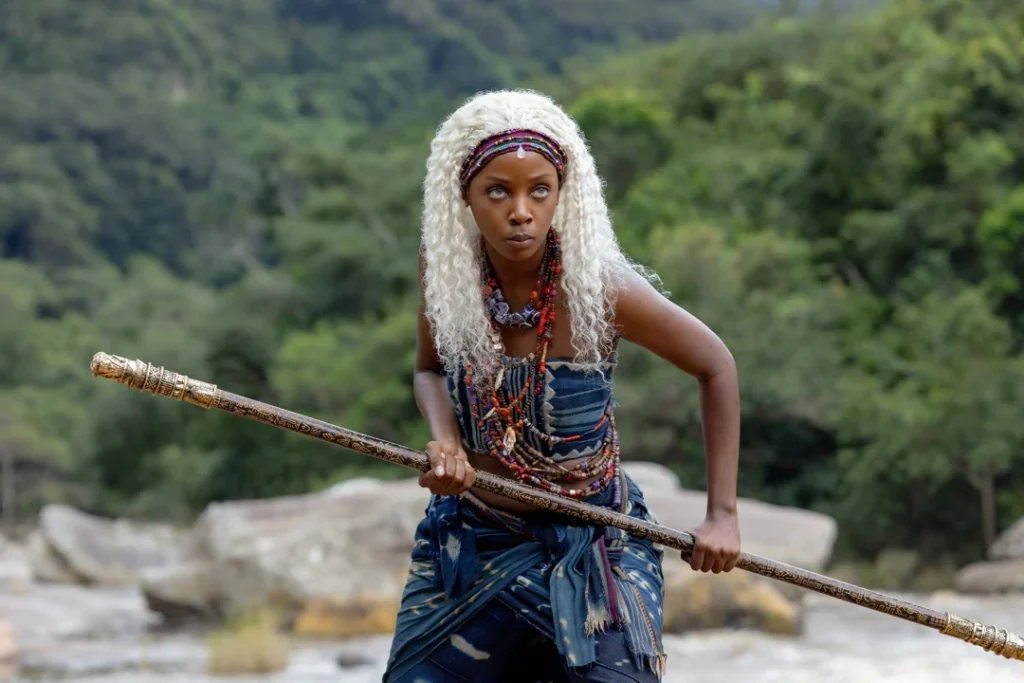
Thuso Mbedu is hardly an unfamiliar name in international film. With strong performances in The Underground Railroad and The Woman King, the South African actress has established herself as a formidable talent. There is certainly a reasonable argument for her casting.
But that doesn’t automatically settle the conversation.
For some Nigerian viewers, the question is not whether Mbedu can act. It is why a story so closely associated with Yoruba culture has a South African actress in its leading role, particularly when Nigeria has a considerable pool of acting talent.
The production does, however, feature Nigerian performers, including Richard Mofe-Damijo, Ayra Starr, Pamilerin Ayodeji, and Shamz Garuba. Their involvement has appeased some viewers, while others wonder whether supporting roles and musical appearances are enough to satisfy expectations for the project.
It is important to note that an actor’s nationality does not automatically determine their ability to represent a culture. Being Nigerian does not automatically make someone the right person for every Nigerian-inspired role either.
However, when a production draws from a particular culture, it is fair to ask whether people from that culture get meaningful opportunities to help tell the story.
Both things can be true: Thuso Mbedu can be a good casting choice, and Nigerian audiences can still question the decisions behind it.
If you have watched the trailer, you may have noticed another talking point: the accents.
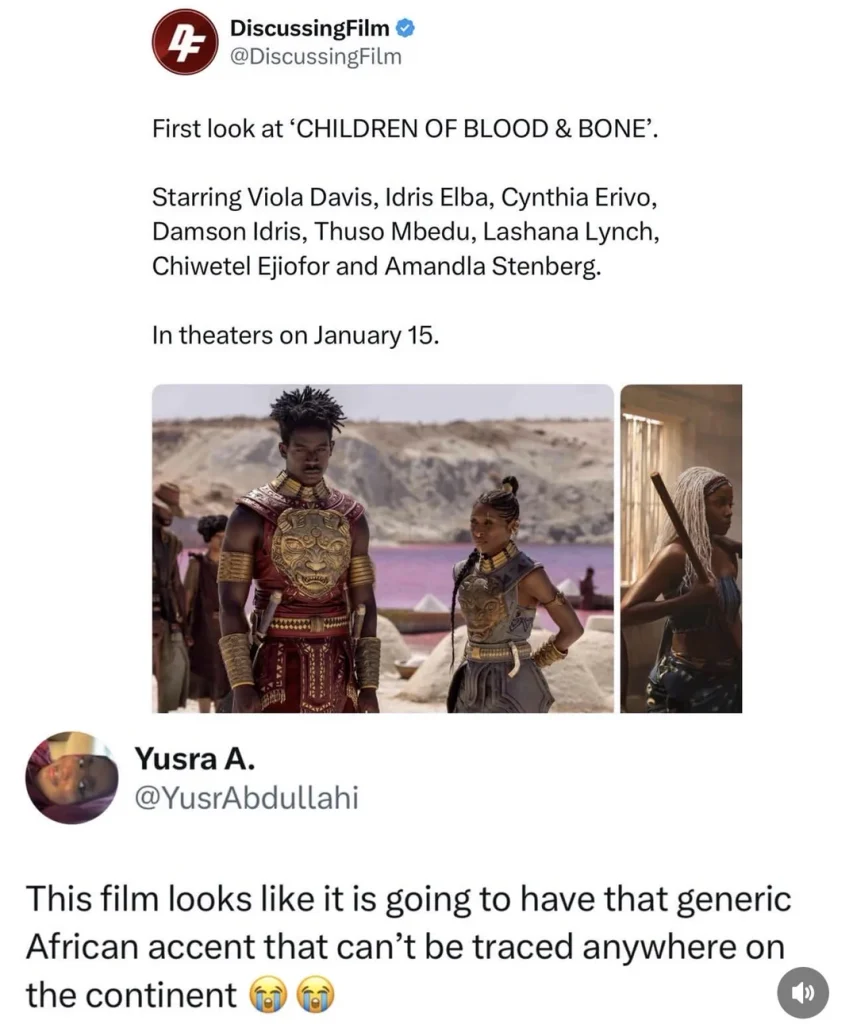
Image source: Reddit
Some viewers have struggled to place the way the characters speak, with one reaction suggesting that the accents sound Kenyan. Others have wondered why the dialogue doesn’t sound more recognisably Nigerian.
Now, Orïsha is not Lagos, and its inhabitants are not necessarily expected to sound like people having a conversation in Ibadan. Fictional kingdoms can have their own speech patterns.
But there is a difference between creating a fictional accent and giving characters a broadly African voice that seems to borrow from everywhere and nowhere in particular.
African stories do not need to be linguistically watered down for international audiences. We have watched enough international cinema to appreciate regional accents, languages, and cultural differences.
Why should African characters be the exception?
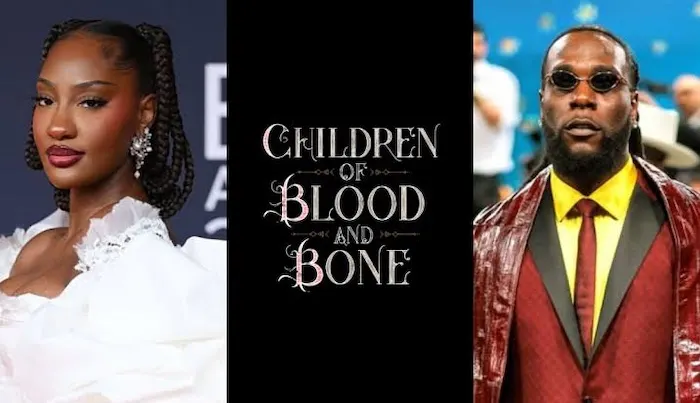
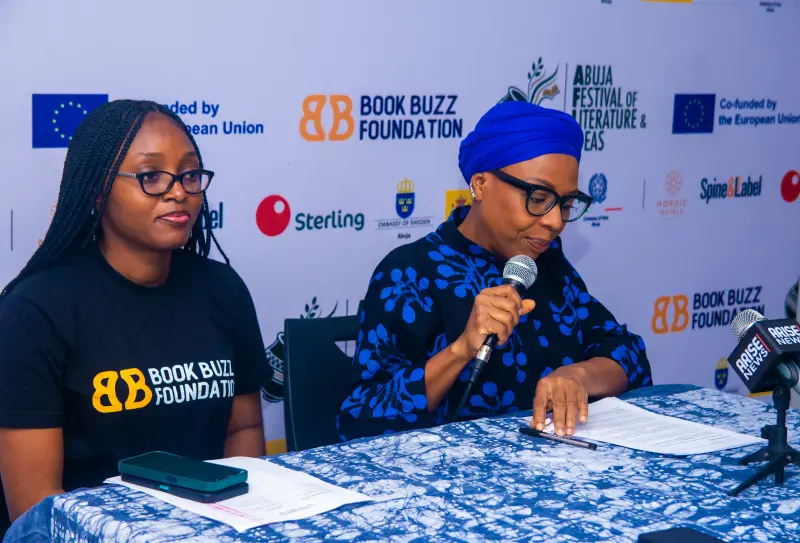
Image source: Arise
One part of the production that has generated a more welcoming reaction is the music. Nigerian singer Tems is serving as executive music producer of the film’s soundtrack, bringing together African and international artists.
The soundtrack also features Nigerian acts including Burna Boy, Ayra Starr, Fireboy DML, BNXN and Show Dem Camp, alongside South African singer Moonchild Sanelly and other performers.
It is an interesting direction for the production. Music is one of the most recognisable ways culture travels, and having a Nigerian artist in such an important creative role gives the project another chance to establish its African identity.
It’s also a reminder that representation goes beyond who appears on screen. Who gets to contribute to the sound, creative direction, and interpretation of a story matters too.
I think we sometimes approach these conversations from opposite ends of the same argument. Perhaps the distinction lies in both intention and execution, although one does not always guarantee the other.
Creative freedom should allow writers to reimagine cultures, but it also should not become an excuse for careless representation. You can invent a world without treating the culture that inspired it as an assortment of convenient symbols.
It is worth remembering that these are people’s origins, histories, and cultural identities. For many, these references are not simply interesting elements of a fantasy novel; they are part of who they are. That’s why the reactions can be so strong, and why the concerns cannot simply be brushed aside.
That said, a full assessment is difficult to make until we have seen the film in its entirety. Good intentions can get lost in execution. Until then, I would encourage the jury to hold its peace and leave the final verdict until the film has had its day in court.
Children of Blood and Bone is expected in cinemas in January 2027, and there is still plenty we haven’t seen. A trailer is hardly enough to determine whether the adaptation will do justice to the books.
Thuso Mbedu deserves the opportunity to give her interpretation of Zélie. Nigerian audiences deserve to ask questions about the representation of their culture. And the filmmakers deserve to be judged on the actual work they have produced.
Fingers crossed, we can manage all three.
Hi I'm Tega, I am a microbiologist with a lifelong passion for reading, I fell in love with books as child (where I was briefly obsessed with Enid Blyton, lol) reading is simply my escape and hobby and sometimes doubles as therapy for me . My favorite genres are African lit, historical fiction, memoirs/biographies and fantasy. I do beta reading and post book reviews which you can check out on my Instagram @ te_ga_o.
Why Greek Mythology Keeps Returning in Modern Fantasy
Tomi Adeyemi Calls the Children of Blood and Bone Film ‘Made for All of Us’, Months After Distancing Herself From It
Lagos Book & Art Festival 2026 Opens at Freedom Park With ‘Repair’ Theme as CORA Turns 35
7 African Literature Books Set Outside Lagos and Abuja
10 Fantasy Characters Who Would Be Insufferable in Real Life
Superman vs Batman vs Wonder Woman
15 Underrated African Romance Authors You’re Missing Out On
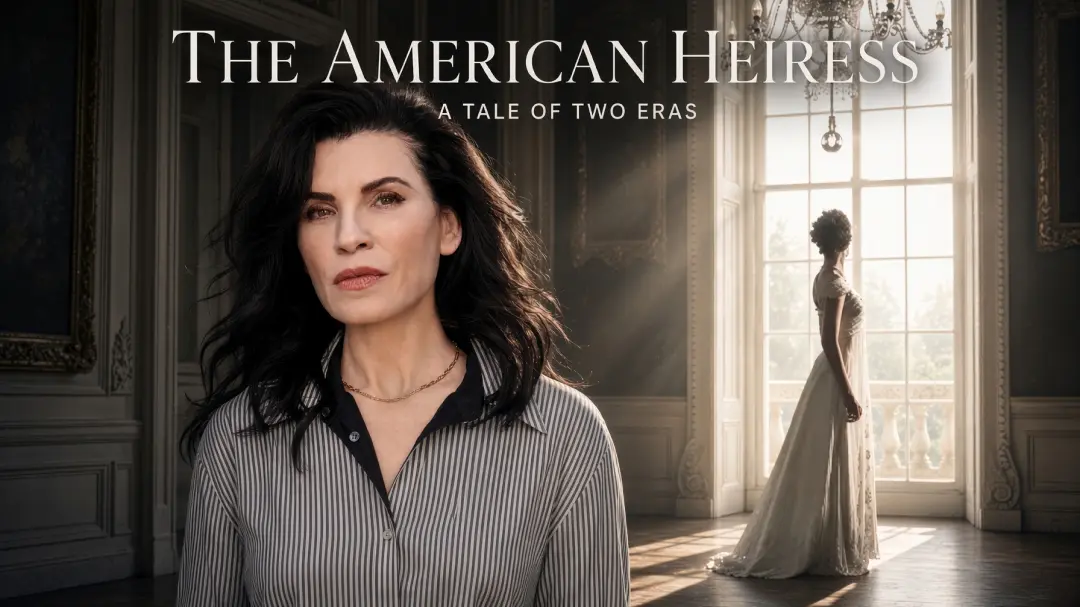
MGM+ Greenlights The American Heiress, Starring Julianna Margulies
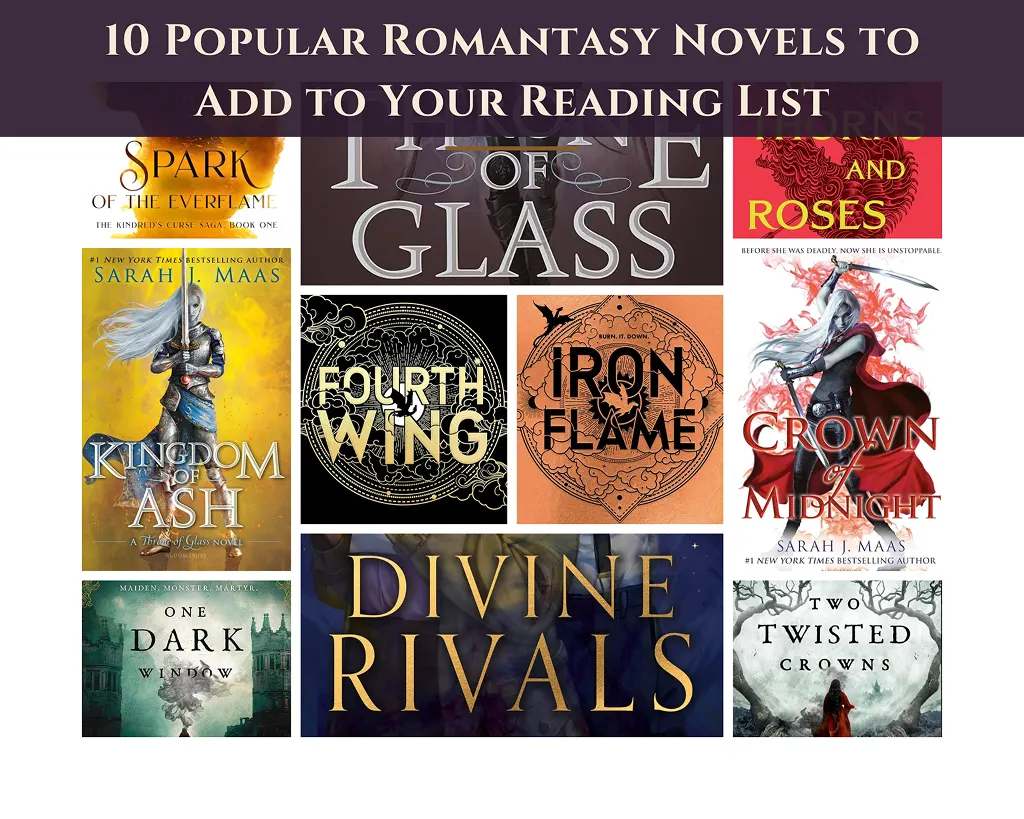
10 Popular Romantasy Novels to Add to Your Reading List
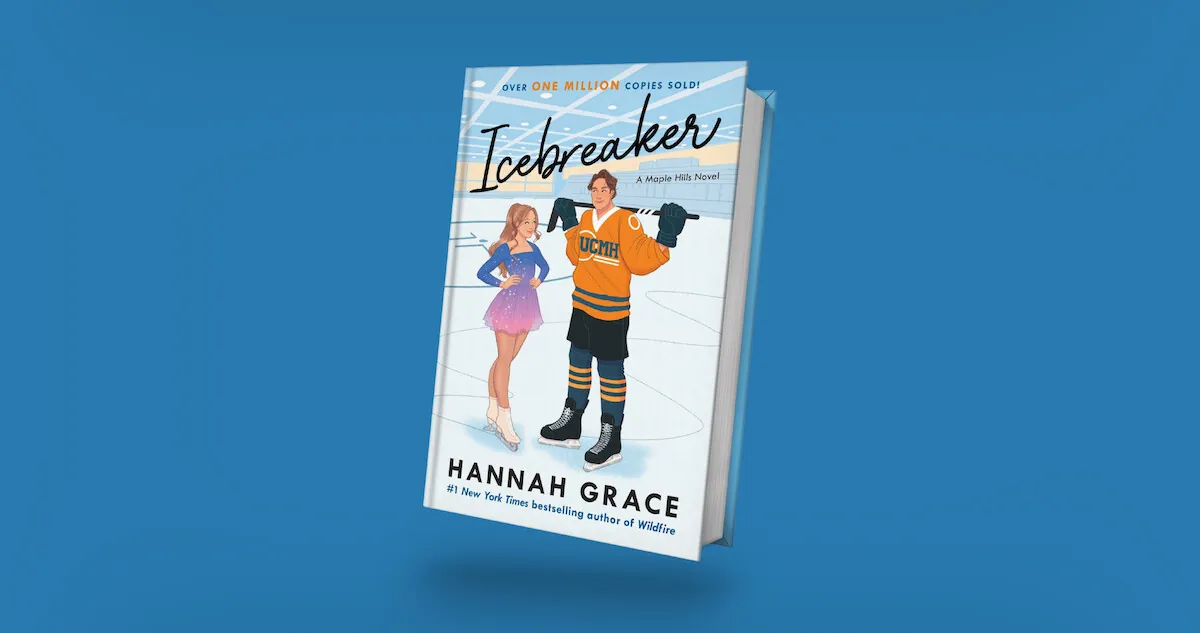
Netflix’s Icebreaker Adds Paul Wesley as Coach Faulkner as Filming Begins on Hannah Grace’s Hockey Romance
Caine Prize Upholds Simbarashe Steyn Kundizeza’s 2026 Win After AI Review
5 Books that Explore the Noir Genre
November 12, 2026 .
Lists, Romantasy
This list explores some of the most popular fantasy romance novels in the genre.
READ MORE
November 13, 2026 .
Essays
Do we forever operate on the defensive, fingers perpetually pointed towards the dark deeds of neo-colonial contemporaries and their colonial forebears?
READ MORE
November 11, 2026 .
Netflix, news
The Vampire Diaries star joins Daisy Jelley and Connor Simos in Netflix’s adaptation of Hannah Grace’s hockey romance, now filming in Vancouver.
READ MORE
November 27, 2025 .
Debates
DC is great at making comics and animated movies, while the MCU has the upper hand in its cinematic aspects
READ MORE
July 20, 2025 .
Animation, Lists
Our list rounds up the top 30 cartoon characters that were villains, each one more wonderfully wicked than the last.
READ MORE

July 20, 2025 .
Opinions
Book recommendations from random places don’t always cut it, and you often end up feeling unsatisfied with them.
READ MORE

July 20, 2025 .
Essays, Opinions
READ MORE

July 20, 2025 .
Essays, Opinions
READ MORE

September 11, 2026 .
Opinions
Book reviews aren’t just a jumble of words on how a book made you feel but also a veritable document that you can quickly refer to when your memories temporarily fail you.
READ MORE

July 20, 2025 .
Opinions
Reading hundreds of pages for a single book can be like facing Smaug, Chiefest of Calamities, but a short story is a small dragon that you can easily conquer.
READ MORE
July 20, 2025 .
Debates, Opinions
Reading nonfiction about what interests you can provide more color and context that might make your fiction reading experience more enjoyable.
READ MORE
September 12, 2025 .
Opinions
In a fast-paced world, reading asks us to slow down, surrender, and sit with another person’s words long enough for them to settle inside us.
READ MORE

November 24, 2025 .
Debates, Opinions
Reading is active while watching movies is passive. The act of turning pages creates a pause that enhances understanding.
READ MORE
July 26, 2025 .
Fantasy, Opinions
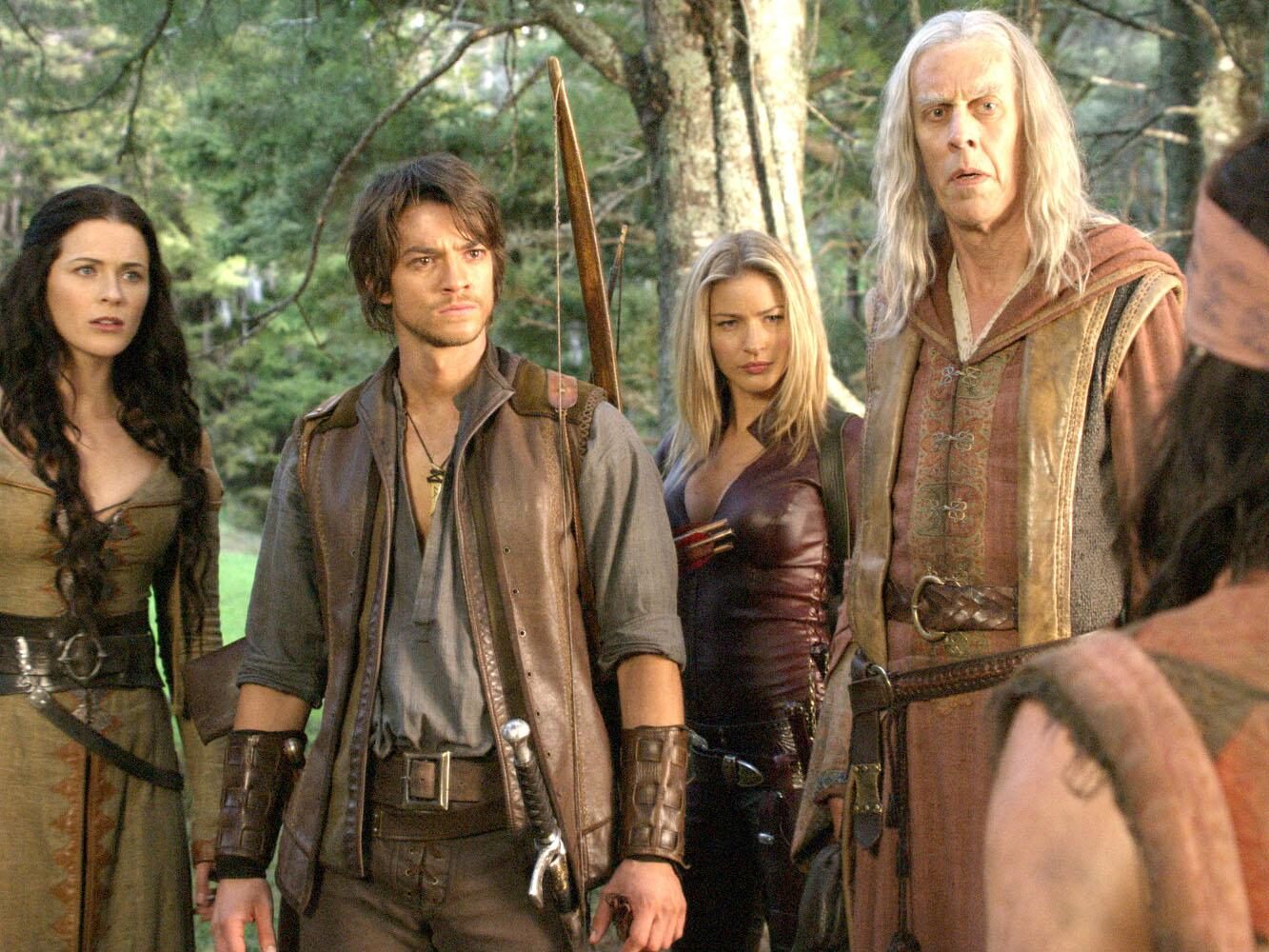
It’s cliche. But it’s rapid. It’s predictable. But it’s enjoyable. For lovers of the classic tropes, Legend of the Seeker is a worthy watch.
READ MORE
Get our magazine for free!