
Menu




















































People often discuss reading and gaming as though one belongs to the world of intellectual activity and the other to mindless entertainment.
There is something revealing about the way people talk about hobbies. Some forms of leisure are granted dignity almost automatically, while others are expected to defend themselves.
Reading usually gets the benefit of the doubt. People assume a person reading a novel is learning, thinking, or doing something worthwhile. Gaming does not receive quite the same courtesy.
Neither picture is particularly fair. People often discuss reading and gaming as though one belongs to the world of intellectual activity and the other to mindless entertainment.
In reality, both can demand attention, interpretation, imagination, memory and decision-making. They engage those abilities differently.
That difference is worth exploring because defending gaming does not require diminishing reading, just as appreciating books does not require treating games as an inferior pastime.
The more interesting question is why society became so comfortable calling one a worthwhile use of time and the other a waste of it in the first place.
Reading benefits from centuries of cultural prestige.

Society associates books with scholarship, intellectual development and cultural inheritance. Even when someone is reading purely for entertainment, the activity carries some of that prestige with it.
Yet reading’s purpose is not solely to make people more educated. People read because stories are interesting. They read to enter another person’s life, explore unfamiliar worlds, solve mysteries, laugh, escape, feel understood or find out what happens next.
The educational benefits are real, but they are not the only reason for reading. A novel introduces vocabulary in a way that a vocabulary list cannot. A word encountered in context relates to the people, situations, and emotions surrounding it. The reader learns not only what a word means but how it behaves.
Reading also requires interpretation. Characters can be unreliable. Narrators can misunderstand events. A seemingly insignificant detail can acquire meaning several chapters later. The reader has to connect things, make predictions and sometimes reconsider earlier assumptions.
That makes reading a more active process than the stereotype of someone quietly sitting with a book might suggest. Research on fiction and cognition has found associations between reading fiction and some verbal and social-cognitive abilities.
However, the evidence is mixed and does not justify grand claims that books automatically make people smarter.
That qualification does not weaken it either. It makes the argument more sensible. Books do not need to be miraculous cognitive machines to be worthwhile.
One peculiar thing about reading is that a book can be simultaneously detailed and incomplete.

A character can enter a room without the reader being told exactly where every chair is positioned. It is more glaring in fiction, but the same kind of mental engagement appears in other forms of reading.
Following an argument requires working out what the writer is actually claiming.
Reading history involves connecting events across time. Reading journalism requires distinguishing reported information from interpretation.
Books also demand sustained attention. Modern life provides an endless supply of things competing for it, while a book asks the reader to remain with one thing long enough for it to become complicated.
That ability to stay with something matters, even when it has no measurable productivity attached.
Gaming tends to enter the conversation with an accusation already attached: isn’t that a waste of time? That question feels odd when applied exclusively to games.
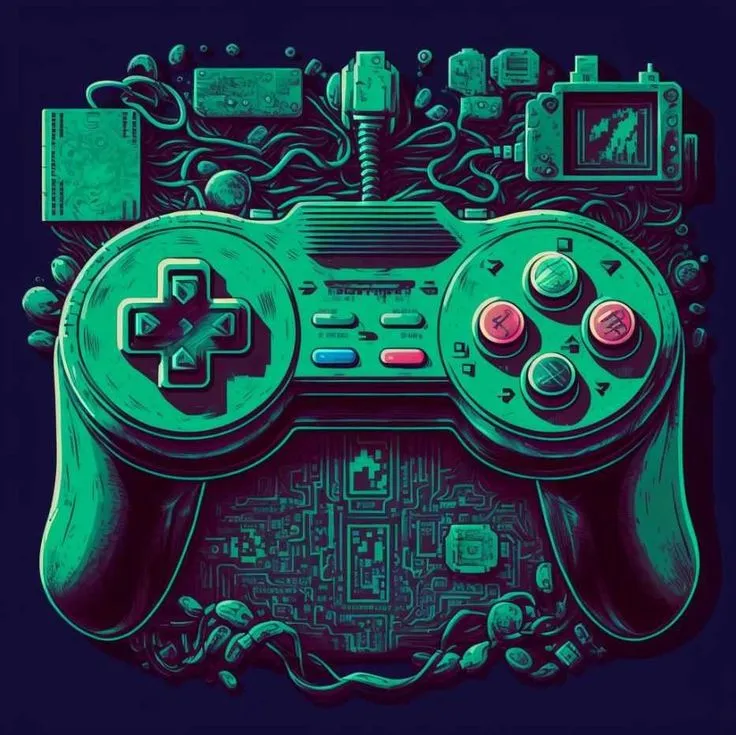
Films consume time. Music does. Sport does. Conversation does. Nobody expects every hour spent watching a film to produce a measurable improvement in cognitive ability before it’s considered worthwhile.
Games, however, are frequently asked to prove that something productive happened while the controller was in use. Some of that criticism is justified.
Gaming can become excessive, and excessive gaming can interfere with sleep, responsibilities, relationships and physical activity. Not every game is particularly demanding, either, and not every gaming session is an intellectually enriching experience.
But those facts do not establish that gaming itself is mindless. They establish something much simpler: one can enjoy a hobby in unhealthy quantities.
The more useful question is what actually happens while a person is playing.
The easiest way to misunderstand gaming is to look only at the physical act. From a distance, a player appears to sit in a chair and press buttons. Inside the game, considerably more can be happening.
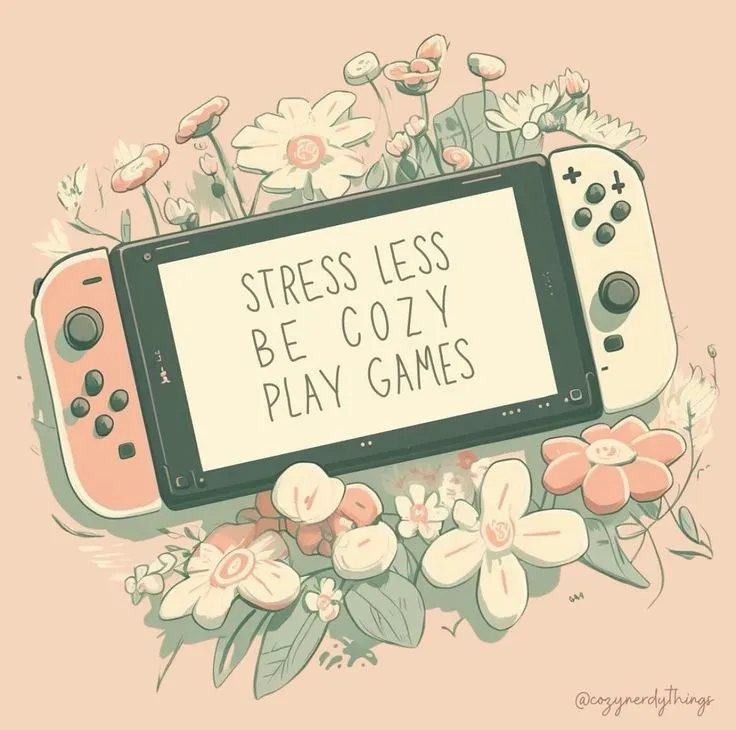
A strategy game may require resource management, planning and anticipation. A puzzle game can involve pattern recognition and hypothesis testing.
A competitive game may require rapid information processing as the situation changes. An exploration game can require remembering locations, identifying environmental clues and deciding where to investigate next.
Even games that appear mechanically simple can demand constant adjustment. An opponent behaves unexpectedly. A plan fails. A resource runs out. New information changes the situation. The player has to respond.
Research into video games has consequently become more nuanced than the older assumption that gaming is either harmless fun or a cognitive wasteland.
Recent reviews have found associations between some forms of video-game play and abilities involving memory, spatial skills, visual attention and cognitive control.
Earlier research has also reported benefits associated with certain types of action gaming, particularly in perceptual and attentional skills.
Emphasis on some forms.
A racing game should not be seen as a substitute for studying. A shooter does not automatically turn every player into a strategic genius. The evidence does not support turning gaming into another exaggerated self-improvement product.
What it does challenge is the idea that nothing is happening cognitively. The player is constantly observing, interpreting, choosing and adapting.
Another difference between reading and gaming has less to do with cognitive ability and more to do with participation.
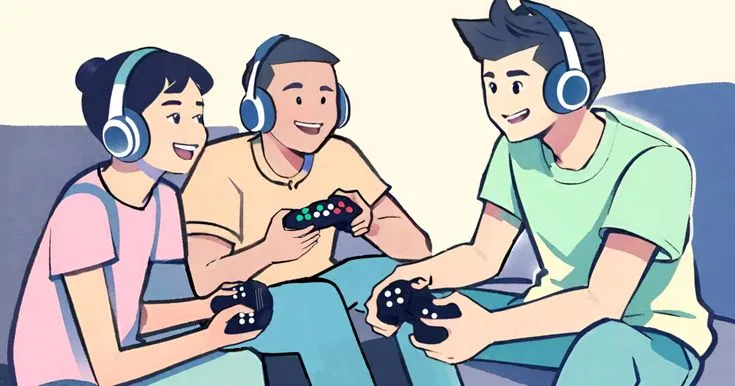
A novel can describe a difficult decision. A game can place the player inside that situation and demand a response. A reader can wonder whether a character should take one path or another. A player may have to choose one.
That does not make games deeper than books. It creates a different relationship with a story.
The player explores rather than observes. Failure becomes information. A hidden area can reward curiosity. A decision can alter what happens next. The story can become something being navigated.
This is also where the connection between reading and gaming becomes more interesting. The two media are not identical, but neither is passive by definition.
One relies heavily on language and imagination, while the other can combine interaction with visual information, sound, rules and consequence.
The similarities between reading and gaming should not erase their differences.

Reading tends to reward sustained attention. A difficult novel may not reveal its significance immediately, and its meaning can change as more information appears. The reader must tolerate uncertainty and let details accumulate.
Games tend to reward responsiveness. A situation changes, and a decision has to follow. A failed strategy provides feedback. An unfamiliar system has to be understood through experimentation. The player learns by acting as well as observing.
Neither ability is inherently superior. Patience has value, but so does adaptability. The mistake is expecting every medium to demonstrate its value in the same language.
A deeper issue lies beneath the argument, and it has less to do with books or games than with how we understand modern leisure.

People increasingly feel compelled to justify free time. Society defends reading because it improves vocabulary. It defends gaming because it improves reaction time. People defend exercise because it improves health. Even rest is sometimes defended because it supposedly improves productivity later.
These benefits may be real. They can also help us understand an activity more closely. But a hobby does not become legitimate just because a study finds a measurable benefit.
Sometimes reading is valuable because a story is beautiful. Sometimes gaming is satisfying because you finally beat a difficult level. Neither experience needs to become a productivity exercise to count as worthwhile.
This does not mean every way of spending time is equally healthy or meaningful. It means leisure has value beyond what we can measure. Being absorbed in a story, solving a difficult problem or simply enjoying an activity can be enough.
This is especially true of gaming, because its defenders can fall into the same trap as its critics. If gaming must constantly prove it improves memory, reaction speed, or problem-solving, it is still being judged by productivity.
That is why the strongest argument is not that reading and gaming are universally good. It is that neither deserves dismissal simply because of the medium through which the experience arrives.
The image of the reader as a socially awkward intellectual and the gamer as someone with nothing better to do is convenient because stereotypes make complicated people easier to categorise.
Reality is less tidy. Reading is not inherently virtuous. A person can read misinformation, propaganda or poorly reasoned material. Reading a hundred pages does not automatically make those pages valuable.
Gaming is no different. One game can be creative, challenging, and memorable, while another can be repetitive, manipulative, or simply boring. A player can enjoy gaming in a healthy way or let it displace sleep, work, relationships, and other responsibilities.
In the same vein, a gamer can be an avid reader, or a reader can also spend an entire weekend gaming.
That combination is not a contradiction. Reading and gaming can both offer imagined worlds, unfamiliar perspectives, challenges and communities.
Most importantly, neither needs an exaggerated claim about its benefits. Reading can sharpen language, encourage interpretation and stretch the imagination.
Gaming can demand spatial reasoning, quick decisions, adaptation and problem-solving. Those possibilities are worth recognising, but they are not the entire point.
That is why the strongest argument is not that reading and gaming are universally good. It is that neither deserves dismissal simply because of the medium through which the experience arrives.

15 Writing-Adjacent Careers for Writers Looking for a Career Change
Authors Spotlight: Khaled Hosseini
The Sound Souls Make When They Die by Chinemefun Chimuanya
If Nollywood Cast Our Favourite African Books: Who Would Play Who?
Best Films About Unexpected Age Gap Romance
Literary Awards and the Racism Card: A Wake-Up Call for Black Africa
Interview with the Vampire Relationships, Ranked
10 Top Recent Films for Action and Comedy Fans
Comma Rules Every Writer Should Know
10 Most Hype-worthy 2026 Book Releases (African Literature Version)
Five Gambling Films That Know the Bet Is Only Half the Story
Movies Where Poker Reveals Who a Character Really Is
July 20, 2025 .
Animation, Lists
Our list rounds up the top 30 cartoon characters that were villains, each one more wonderfully wicked than the last.
READ MORE
April 29, 2026 .
Lists, Opinions
The Mouse is famous for its princesses and princes. However, the studio’s true genius lies in its embrace of “ugly Disney characters”.
READ MORE

November 27, 2025 .
Lists, Mythology
While this isn’t an exhaustive list, it comprises some of the most popular mythical creatures from around the world.
READ MORE
October 28, 2025 .
Lists, Marvel, MCU, Opinions
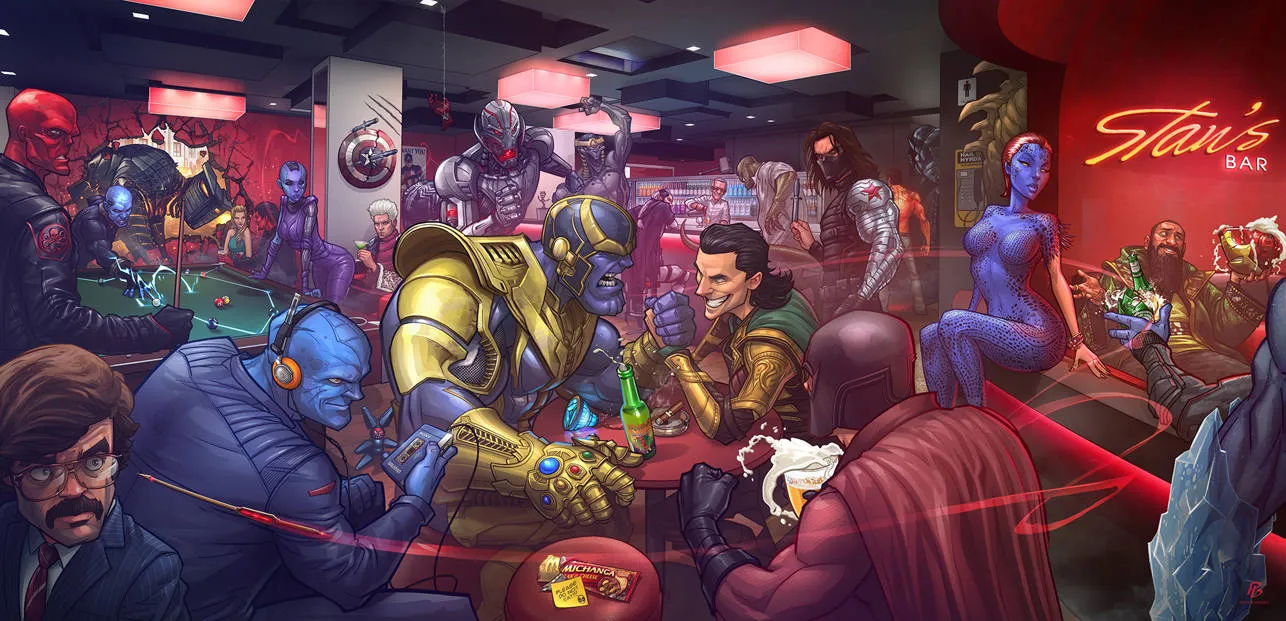
Let’s go through a list of the top 7 strongest Marvel villains, from the wickedly powerful to the absolutely unstoppable.
READ MORE
February 26, 2026 .
Cartoons, Lists
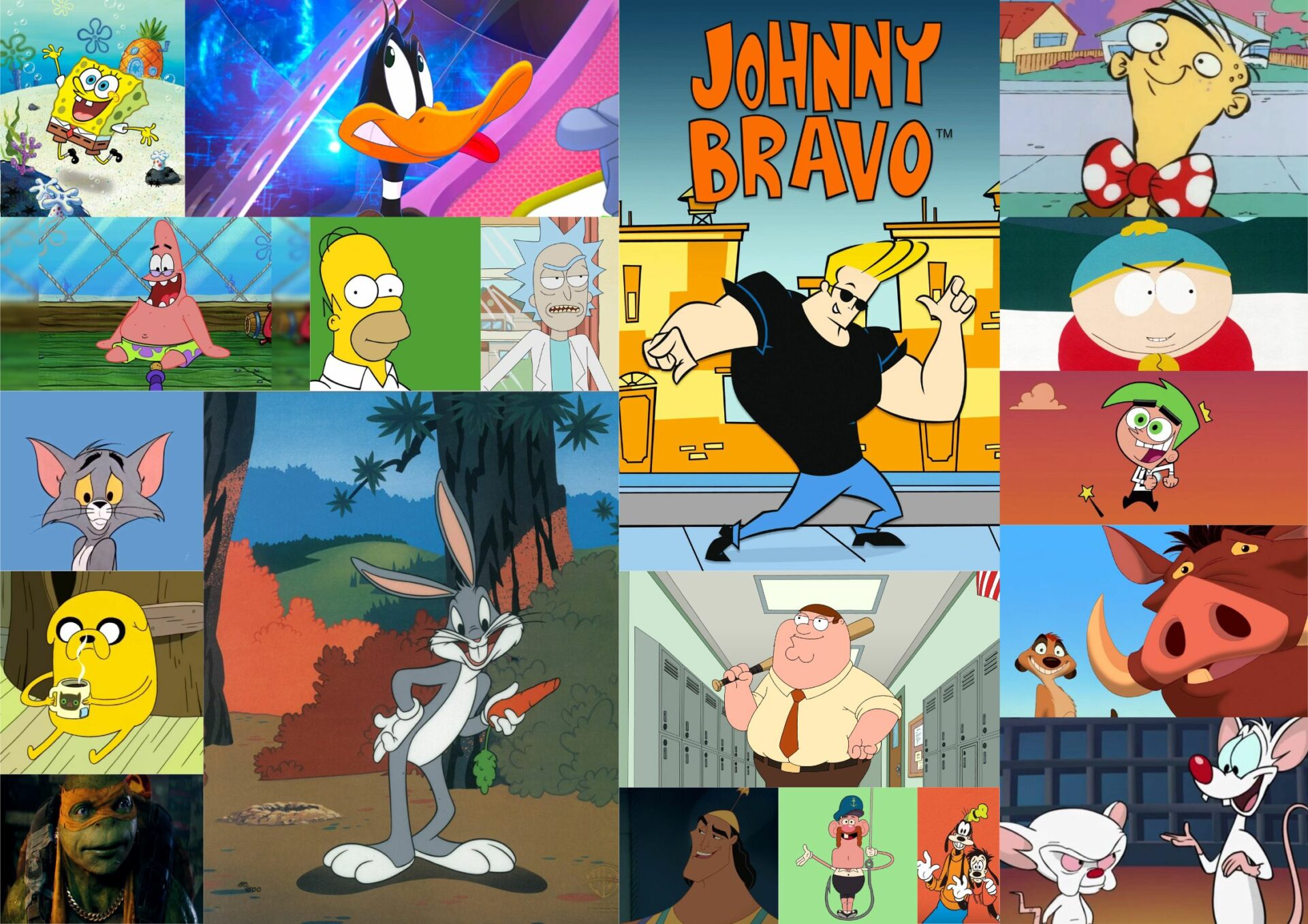
There are some outright funny cartoon characters who exist solely to crack you up, loud, hard, and with zero apology.
READ MORE

July 20, 2025 .
Opinions
Book recommendations from random places don’t always cut it, and you often end up feeling unsatisfied with them.
READ MORE

July 20, 2025 .
Essays, Opinions
READ MORE

July 20, 2025 .
Essays, Opinions
READ MORE

September 11, 2026 .
Opinions
Book reviews aren’t just a jumble of words on how a book made you feel but also a veritable document that you can quickly refer to when your memories temporarily fail you.
READ MORE

July 20, 2025 .
Opinions
Reading hundreds of pages for a single book can be like facing Smaug, Chiefest of Calamities, but a short story is a small dragon that you can easily conquer.
READ MORE

July 20, 2025 .
Debates, Opinions
Reading nonfiction about what interests you can provide more color and context that might make your fiction reading experience more enjoyable.
READ MORE

September 12, 2025 .
Opinions
In a fast-paced world, reading asks us to slow down, surrender, and sit with another person’s words long enough for them to settle inside us.
READ MORE

November 24, 2025 .
Debates, Opinions
Reading is active while watching movies is passive. The act of turning pages creates a pause that enhances understanding.
READ MORE
July 26, 2025 .
Fantasy, Opinions
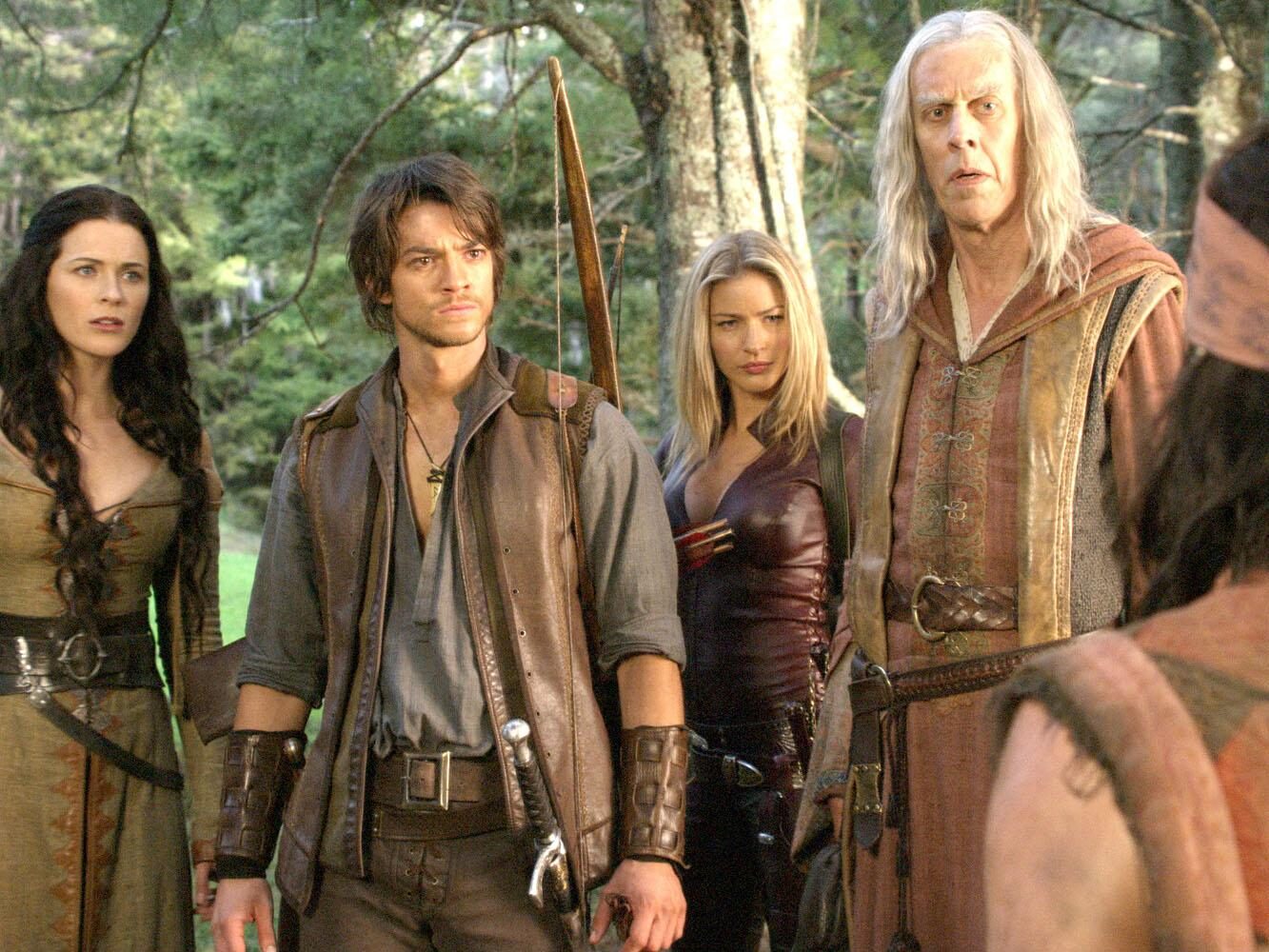
It’s cliche. But it’s rapid. It’s predictable. But it’s enjoyable. For lovers of the classic tropes, Legend of the Seeker is a worthy watch.
READ MORE

Get our magazine for free!