














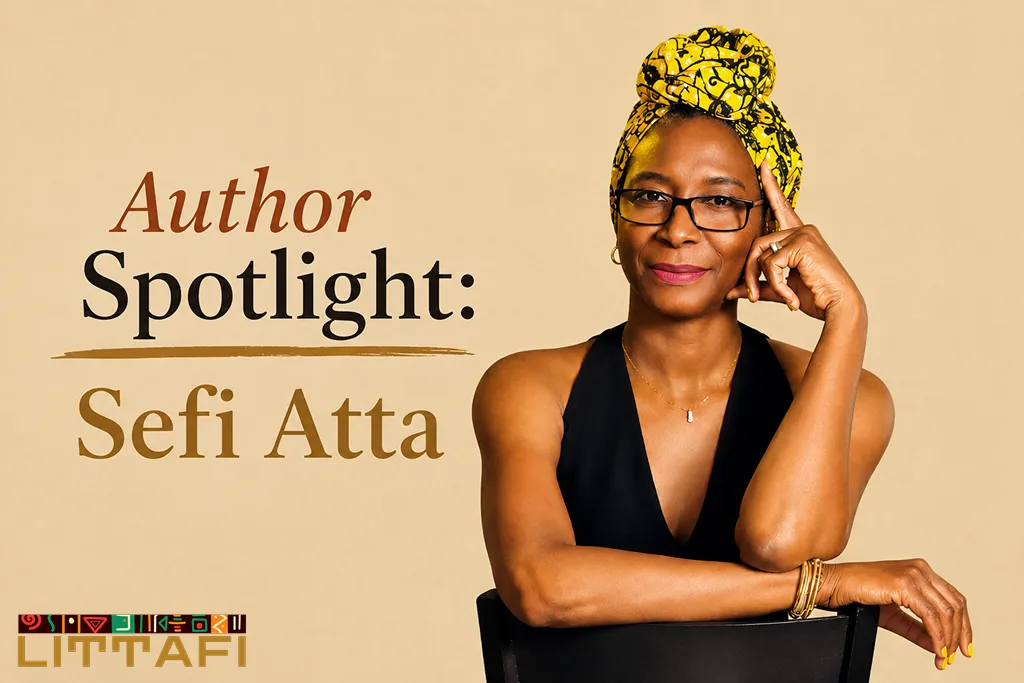




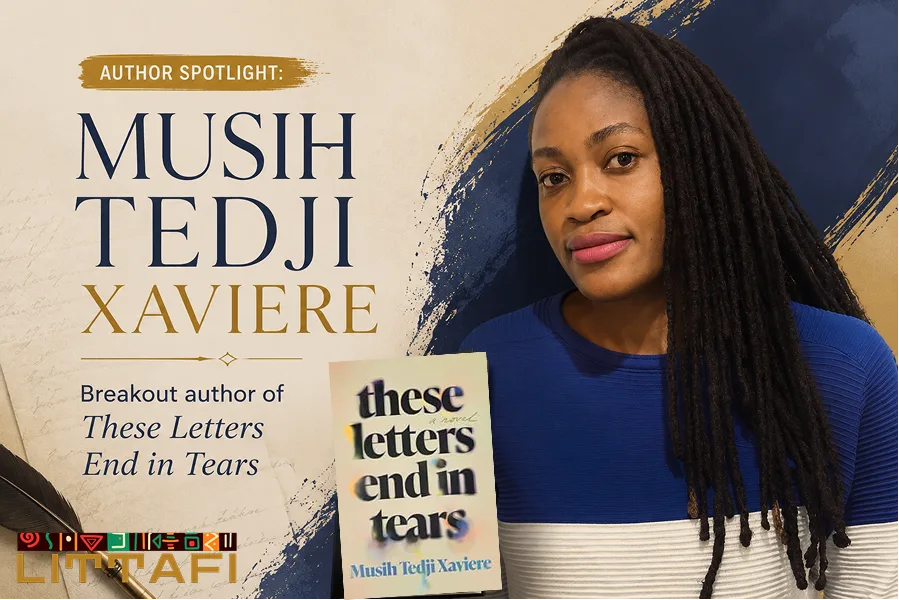

Musih Tedji Xaviere is a Cameroonian writer whose quiet confidence, empathy, and belief in overlooked stories mark her as one of African literature’s most promising new voices.
This author wasn’t joking when she wrote the title of her debut novel. Those letters really did end in tears. Consider this your only warning.
And I know what you’re thinking: “African literature already has enough stories about pain.” Which is true, but you haven’t seen one like this. It is a true original.
These Letters End in Tears isn’t memorable because it’s about grief, homophobia, or loss. It’s memorable because it’s about love and longing. These are two emotions that modern African society represses heavily: what it asks of us, what it leaves behind, and how it can keep someone alive by sheer will.
More than anything, it introduces a writer whose voice deserves attention.
Welcome to Know Your Authors (KYA), a series that looks beyond individual books to understand the writers behind them. Some authors have spent decades shaping African literature. Others are only just beginning. Debut stand-outs is our space for those emerging voices whose first books suggest there’s much more to come.
Our second edition features Musih Tedji Xaviere.
Musih Tedji Xaviere is a Cameroonian writer whose journey to publication is just as compelling as her fiction.
Listening to her speak about becoming a published author, what stands out isn’t dramatic ambition or overnight success. It’s conviction. Xaviere believed in her work and in its right to exist. Even when there was no obvious path to publication, she kept writing until the industry agreed with her.
As a child, she discovered Charles Dickens’ Oliver Twist and decided she wanted to become a writer. As a teenager, she wrote stories her classmates eagerly passed around. In her twenties, unable to find a publisher in Cameroon, she self-published a young adult novel rather than waiting for an opportunity.
That persistence paid off.
Her debut novel, These Letters End in Tears, won the 2021 Pontas & JJ Bola Emerging Writers Prize before its official publication in 2024. Since then, it has earned critical acclaim and introduced readers to one of the most exciting new voices in contemporary African literature.
Her experience in the industry is a reminder that believing in your work isn’t arrogance; sometimes it’s the first requirement.
It’s easy to describe These Letters End in Tears as a novel about two women in love in a country where that love is forbidden. That description is accurate, but it’s also incomplete.
The novel follows Bessem, a catholic woman without deep convictions, as she writes letters to Fatimatou, the Muslim woman she loved and lost. Through those letters, readers piece together a relationship greatly affected by religion, family expectations, state-sanctioned homophobia and cruelty.
The issues weren’t only the oppositions. That they weren’t allowed even to exist was a problem enough, but the reduction and dehumanization of individuals when found out.
But beneath all of that is another story. This is a novel about longing. About the conversations we keep having with people who are no longer with us, the space we hold for them, the version of ourselves that exists before heartbreak, and what we become after it.
One of the things I admired most was Bessem’s voice. She had an almost absolutist reasoning. She speaks with certainty, has strong opinions, and often believes she’s right.
But as the story unfolds, we begin to see the gaps in her thinking. She’s impulsive at times, blind to some of her own flaws, and occasionally unfair in the way she judges others. That balance makes her realistic.
We all know a Bessem somewhere.
Xaviere resists the urge to create a flawless narrator. Instead, she gives us someone who feels real, capable of great love, but also capable of getting things wrong.
Fatima is equally memorable. If not the most memorable of all the characters. By the end of the novel, I realised I wanted to know her beyond the pages. I wanted to see her laugh, hear her speak, and understand the parts of her life Bessem couldn’t fully capture, experience her outside the book.
Having both main characters know and accept who they are is not a common trope and could only be written by someone who truly wanted to understand, not just write.
Identity, belonging, community, and love may be at the emotional centre of the novel, but freedom to be was what both grappled with.
Telling a story through letters isn’t new, but it isn’t easy either. For more thoughts on the role structure plays in narration, you can refer to this piece, Perhaps It’s Time We Talked About Structure in African Literature.
A letter has to sound personal enough to feel authentic while carrying enough narrative weight to move the story forward. Xaviere manages to present a balanced narrative using this format and a single narrator.
The letters never feel like a gimmick. They create intimacy, allow memories to surface naturally, reveal Bessem’s blind spots, and make the reader emotionally invested in the characters.
It’s an ambitious structure for a debut, and one she handles with confidence.
In interviews, Xaviere has spoken about wanting to write stories that centre queer African lives without reducing them to suffering alone. That intention is clear throughout These Letters End in Tears.
And yes, the novel deals with discrimination and grief. To address the concern that African lit is trauma-centered. But it also makes room for friendship, humour, tenderness, faith, hope and ordinary moments. Its characters are never defined by a single aspect of their identity.
For a debut novel, that’s an impressive achievement, which is also why Musih Tedji Xaviere is a writer to watch.
Musih Tedji Xaviere is a Cameroonian writer whose quiet confidence, empathy, and belief in overlooked stories mark her as one of African literature’s most promising new voices.

Hi I'm Tega, I am a microbiologist with a lifelong passion for reading, I fell in love with books as child (where I was briefly obsessed with Enid Blyton, lol) reading is simply my escape and hobby and sometimes doubles as therapy for me . My favorite genres are African lit, historical fiction, memoirs/biographies and fantasy. I do beta reading and post book reviews which you can check out on my Instagram @ te_ga_o.
July 20, 2025 .
Animation, Lists
Our list rounds up the top 30 cartoon characters that were villains, each one more wonderfully wicked than the last.
READ MORE
April 29, 2026 .
Lists, Opinions
The Mouse is famous for its princesses and princes. However, the studio’s true genius lies in its embrace of “ugly Disney characters”.
READ MORE
October 28, 2025 .
Debates, Lists, Marvel, MCU
Every Marvel hero brings something to the table. But if we had to pick the top 8 most popular Marvel superheroes, who would make the cut?
READ MORE
May 6, 2026 .
Lists, MCU
Spider-Man is one of the many superheroes from the Marvel Universe whose stories shaped many childhoods. Who is your strongest Spiderman?
READ MORE
November 27, 2025 .
Lists, Mythology
While this isn’t an exhaustive list, it comprises some of the most popular mythical creatures from around the world.
READ MORE

July 20, 2025 .
Writer Resources
Discover the differences in First-Person Point of View and Third-Person POV, and how each impacts character connection and narrative style.
READ MORE
May 15, 2026 .
Writer Resources
The tension between writer-centered and reader-centered approaches defines how a story is told and who it serves.
READ MORE
October 22, 2025 .
Essays, Writer Resources
Ever found a book that looks like a comic but tells a complete, well-structured story? Congratulations, it’s a graphic novel.
READ MORE
June 26, 2026 .
Writer Resources
Writing starts with forming ideas, imagination, dreams, and thoughts. And when these condense into a coherent progression, you have a plot.
READ MORE
May 10, 2026 .
Writer Resources
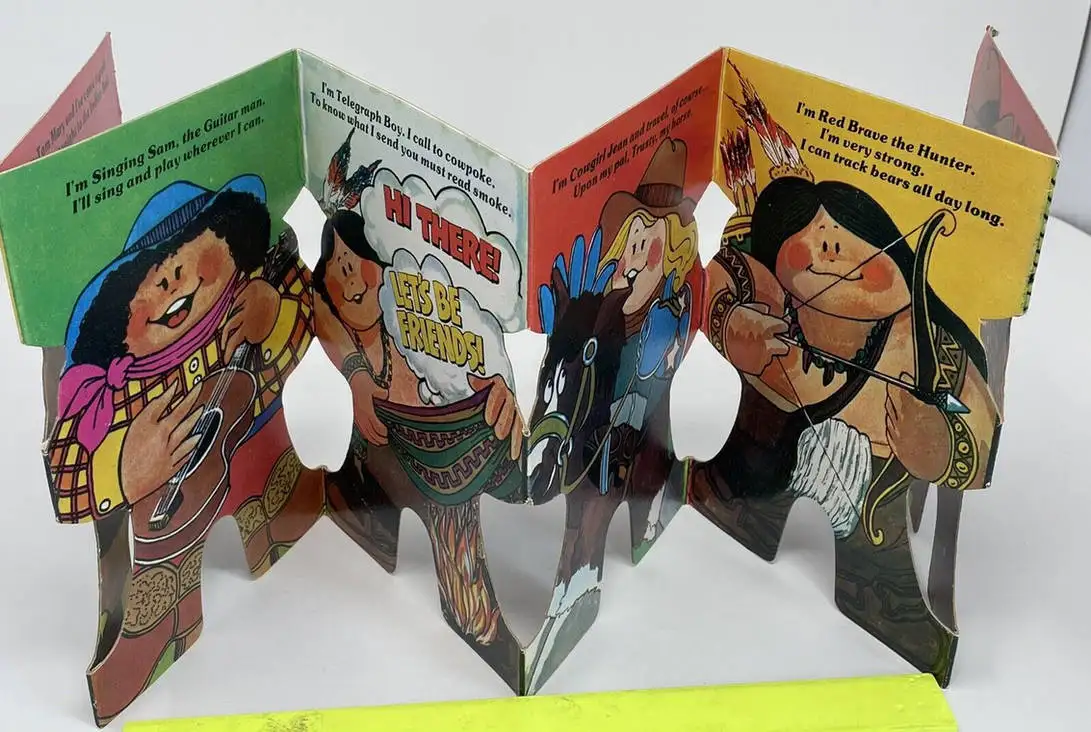
What is a board book, and how does it differ from others? Traditional publishing usually means novels, but published works span much more.
READ MORE
July 24, 2025 .
Essays, Writer Resources
READ MORE
February 8, 2026 .
Writer Resources
Breaking into traditional publishing can feel like decoding a secretive industry. This guide is a resource for finding the right agent.
READ MORE
February 28, 2026 .
Writer Resources
There are three paths in book publishing: traditional, self-publishing, and hybrid. The current focus is on traditional publishing.
READ MORE

July 20, 2025 .
Writer Resources
Today, writers are needed who combine creativity with technical expertise, professionalism, and adaptability.
READ MORE
Get our magazine for free!