


































A visually stunning, ambitious adaptation, but at what cost to the source material?
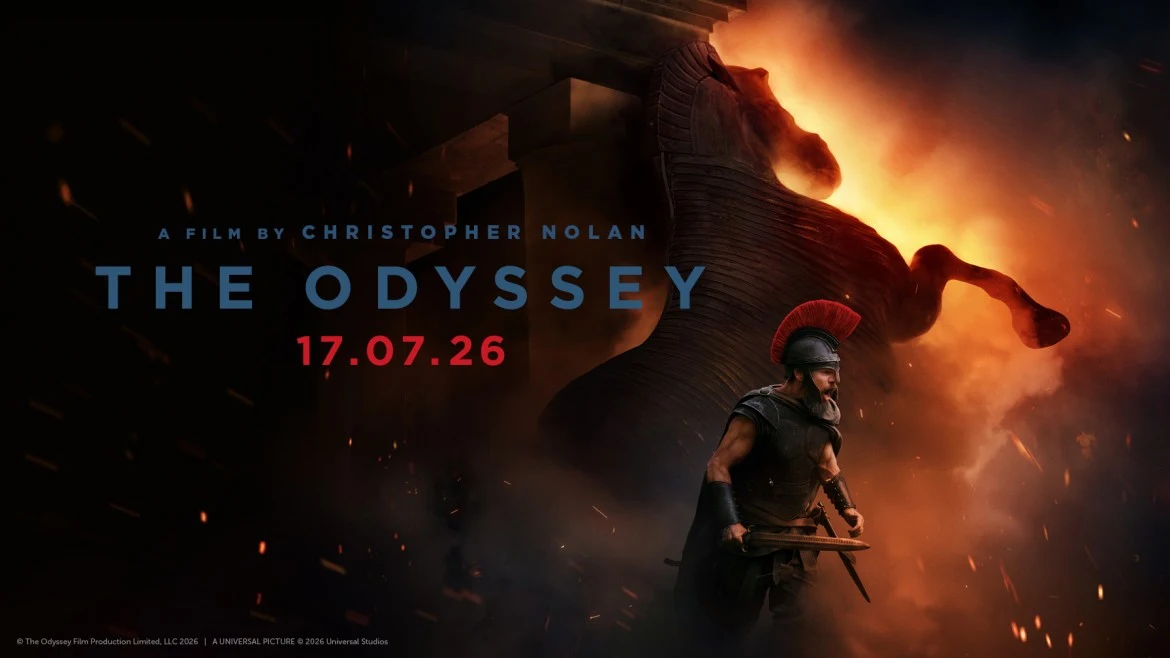
It’s been over a week since I watched Christopher Nolan’s The Odyssey in IMAX (as Nolan intended, as he always intends, as he will probably have engraved on his tombstone).
And I’ve been sitting with my feelings about it ever since, trying to figure out exactly how I feel and how to write this review.
So here’s the short version. It’s a Nolan film. Epic battle sequences, visually stunning cinematography, a nonlinear narrative structure, and enough spectacle to justify the ticket price. But this is also an adaptation of one of the most beloved stories in human history, and Nolan made some choices we need to talk about.
I enjoy Nolan’s movies. Inception was my first foray into the Nolan universe, and later Interstellar, but do I consider myself a Nolan fangirl? Not really. I enjoy his films and his dedication to his craft, but sometimes I feel he goes overboard. Sometimes it pays off; other times it doesn’t.
Homer’s The Odyssey follows Odysseus, King of Ithaca, on his grueling ten-year journey home after the Trojan War. What should be a straightforward voyage turns into an odyssey (quite literally) of divine punishment, mythical monsters, enchanted islands, and the kind of suffering that makes you wonder what exactly Odysseus did to deserve all this.
Spoiler: it was pride. It’s always pride.
Back in Ithaca, his wife Penelope holds the kingdom together while suitors swarm the palace, all angling to replace Odysseus and claim his throne. His son Telemachus, barely remembering the father who left before he could walk, is caught between grief and determination to find him.
And somewhere in between all of this, the gods are arguing about what to do with Odysseus; because in Greek mythology, the gods are essentially reality TV producers and humanity is the show.
Nolan’s version features a stacked ensemble cast of Matt Damon as Odysseus, Anne Hathaway as Penelope, Tom Holland as Telemachus, Zendaya as Athena, Charlize Theron as Calypso, Samantha Morton as Circe, Robert Pattinson as the suitor Antinous, Lupita Nyong’o as Helen and Clytemnestra. Mia Goth, Jon Bernthal, Elliot Page, Himesh Patel, and John Leguizamo round out the rest.

If you go in expecting a linear retelling or the same plot structure, Nolan will immediately disappoint you and then slowly win you back.
True to form, he doesn’t start at the beginning. Instead of opening where most adaptations begin, with Menelaus arriving to recruit Odysseus for the Trojan War, he starts with the last act.
Nolan drops us into the banquet hall in Ithaca, Penelope’s suitors gathered as a bard recounts the tales of Odysseus’s journey. From there, the film unfolds in fragments: past and present bleeding into each other, the story assembling itself like a puzzle you’re solving in real time.
Having recently rewatched the 1997 version with Armand Assante, and being, let’s be honest, deeply embedded in the Epic: The Musical fandom, I went in with very specific expectations.
Nolan subverted most of them. For audiences less familiar with the source material, the nonlinear format might be slightly disorienting, but he handles it with enough clarity that you don’t lose the thread. This is his wheelhouse, and he navigates it well.

Here’s the part of Nolan’s adaptation that I have issues with.
The gods in Nolan’s Odyssey are deliberately, consciously diminished. They aren’t a prominent part of the story, even though they’ve always been.
Athena takes the shape of a priestess slain during the sacking of Troy, and the film deliberately leaves it ambiguous whether she’s truly a goddess or a figment of Odysseus’s guilt.
Calypso is stripped of her goddess status entirely. There’s no indication that she’s a goddess whatsoever.
The only character with any unambiguous supernatural power is Circe, and even her magic is rendered in a way that’s less “Greek mythology” and more “deeply unsettling.”
Nolan’s approach is essentially to replace divine intervention with natural phenomena. What the ancient Greeks called acts of the gods, the film reimagines as storms, human error, and the kind of catastrophic bad luck that science rather than Poseidon’s wrath can explain. He’s adapting the myth for a modern secular audience, and I understand that choice.
My problem with this approach is that the gods aren’t incidental to The Odyssey; they’re the engine.
The Trojan War itself was orchestrated by divine interference.
Eris, the goddess of discord, lit the match (with her golden apple), and Aphrodite bribed Paris to win the argument against Hera and Athena.
Odysseus’s decade-long detour home was the result of Poseidon’s personal vendetta. Every major event in the story flows directly from divine will. Remove that, and you transform a mythological epic about humanity’s relationship with fate and the gods into an action movie about a very tired man trying to get home.
It’s a fundamentally different story, even if the surface details remain.
A lot of what makes Odysseus compelling, and what Epic: The Musical understood beautifully, is the way divine forces and personal flaws interact to create his tragedy. His pride. His hubris. The moment he reveals his name to the blinded Cyclops and hands Poseidon the ammunition to destroy him.
Nolan’s adaptation strips that part away. The Cyclops and Odysseus don’t even have a conversation.
In the original, Odysseus famously tells Polyphemus his name is “Nobody,” then, drunk on his victory over the creature, he shouts his full government name (and address) as they sail away. And that’s the exact moment everything starts going wrong.
In Nolan’s version, the Cyclops barely speaks at all. The whole exchange is gone. We lose the wit, the hubris, and the turning point.
When Odysseus’s crew later expressed surprise that Polyphemus could speak after they injured him, Odysseus’s response, “if you were a giant, would you bother conversing with ants?” is a genuinely great line. But it doesn’t replace what was lost.

Let’s talk about the elephant in the room, because people online certainly did.
Yes, Lupita Nyong’o plays Helen of Troy (which isn’t accurate casting). Elliot Page is in the film. Yes, American accents are used throughout rather than anything approximating ancient Greek or even the standard British one we’re used to hearing.
There was significant backlash in the lead-up to release, and historians were not thrilled about the various inaccuracies, including the battle armor, geography, and narrative liberties.
After watching the film, I see that none of it detracts from the story the way critics feel. My only gripe is the nonexistence of the gods and other creative choices he made with the story. I also have mixed feelings about the ending.
The diverse casting didn’t pull me out of the film for a single moment. The American accents took slightly longer to settle into, but this is Nolan’s interpretation; we can ignore it. If you go in ready to receive it on its own terms, the cast largely delivers.
Damon carries the film with the kind of weary gravitas the role demands. Hathaway is quietly devastating as Penelope. She embodies the Queen of Ithaca, holding down the fort until her husband returns. And Charlize Theron as Calypso, even stripped of her full mythology, is magnetic in every scene she occupies. And I loved Tom Holland as Telemachus.
The battle sequences are great. The cinematography, Hoyte van Hoytema shooting the whole thing on IMAX film, is worth the price of the premium ticket alone. Ludwig Göransson’s score does exactly what it needs to.
Nolan’s commitment to practical effects creates some genuinely visceral moments, though it also gives us a Cyclops that looks more unsettling than imposing. And the scene with the sea creature, Scylla, could have been more imposing if they used proper CGI. But that’s all minor gripes.
The structure is elegant for what it is. The decision to frame the film through a bard retelling Odysseus’s stories in the banquet hall gives the nonlinear narrative a mythological logic—stories within stories, as Homer himself intended.
What doesn’t work is the cumulative weight of the omissions. Odysseus’s pride, the specific, catastrophic, magnificent pride that drives the entire tragedy, is muted here.
The film seems almost to want to rehabilitate him and make him more sympathetic for modern audiences. There’s been some discussion about whether this version was designed to redeem Odysseus, and I think that’s a fair reading. The result is a more likable Odysseus who is also, somehow, less interesting.
Christopher Nolan’s The Odyssey is a genuinely impressive film; beautifully performed and ambitious in scope. As a piece of cinema, it earns its place. As an adaptation of Homer, it makes choices I’m still not entirely satisfied with.
Nolan does spectacle better than almost anyone alive. What he’s less interested in — the gods and the cosmic unfairness of divine punishment — is exactly what drew people like me to The Odyssey in the first place.
If you’re like me and not entirely satisfied with Nolan’s version, feel free to rewatch the 1997 version or listen to the viral, nine-part concept album adaptation of Homer’s The Odyssey created, written, and produced by Jorge Rivera-Herrans.
I’m always ready to recruit new people into the Epic Fandom.
While there’s no official stage performance and we’re still waiting for the animated movie version, you can still enjoy the saga thanks to fan-made animations on YouTube.

Chioma is a content marketer and film buff. When she isn't creating stuff for brands, you can find her watching movies and reading. Favorite genres include; Fantasy, Action, YA, Thriller, and Chick-Lit.
July 20, 2025 .
Animation, Lists
Our list rounds up the top 30 cartoon characters that were villains, each one more wonderfully wicked than the last.
READ MORE
April 29, 2026 .
Lists, Opinions
The Mouse is famous for its princesses and princes. However, the studio’s true genius lies in its embrace of “ugly Disney characters”.
READ MORE
May 6, 2026 .
Lists, MCU
Spider-Man is one of the many superheroes from the Marvel Universe whose stories shaped many childhoods. Who is your strongest Spiderman?
READ MORE
October 28, 2025 .
Lists, Marvel, MCU, Opinions
Let’s go through a list of the top 7 strongest Marvel villains, from the wickedly powerful to the absolutely unstoppable.
READ MORE
October 28, 2025 .
Debates, Lists, Marvel, MCU
Every Marvel hero brings something to the table. But if we had to pick the top 8 most popular Marvel superheroes, who would make the cut?
READ MORE

November 8, 2022 .
biography, comedy, daniel radcliffe, hollywood, music
READ MORE
May 19, 2026 .
Drama, hollywood, Movie Reviews
A24’s The Drama is a social commentary on secrets and our reactions to them.
READ MORE

November 26, 2023 .
hollywood, moviereview
In low-budget projects like this, success often hinges on the cast’s talent, and let me assure you, the ensemble in The Wedding Year can act!
READ MORE
May 18, 2026 .
biography, hollywood, movie review, music
I did not go to watch Michael expecting it to capture the full complexity of his life. I went for the nostalgia. And on that front, the film delivers completely.
READ MORE
December 31, 2022 .
Daniel Craig, Knives Out, movie review
Add it to your “Watch Later” list on Netflix, and get ready to solve the case!
READ MORE

April 15, 2024 .
adire, movie, movie review
Adire is an ambitious story about showing that nobody is above redemption and that love is always around the corner.
READ MORE
May 28, 2026 .
A24 Movies, hollywood, Movie Reviews
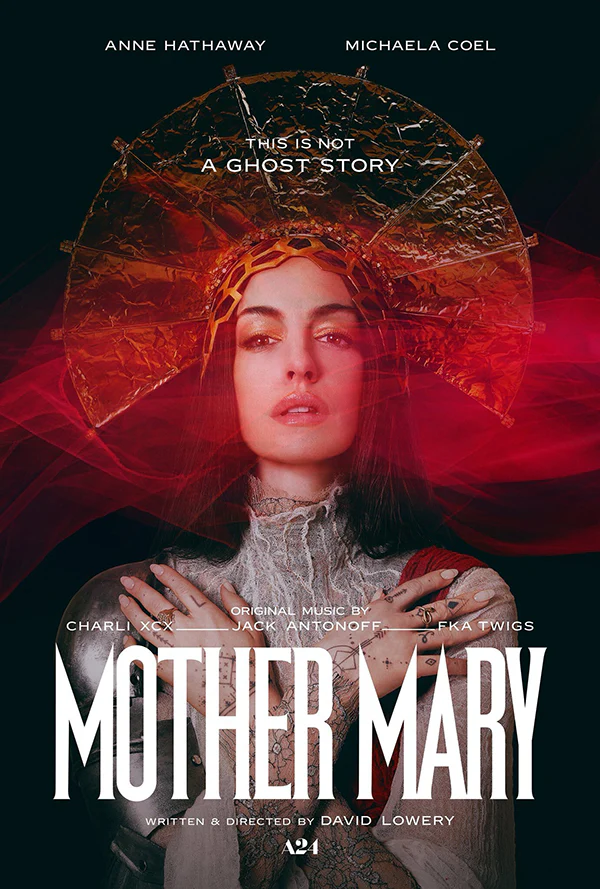
Some movies you watch. Some movies you feel. Mother Mary is the latter.
READ MORE
August 26, 2026 .
hollywood, Opinions
Writers don’t predict a date or a specific gadget. They notice something small and easy to ignore already happening, and ask what it looks like fully fleshed out.
READ MORE

Get our magazine for free!